Private Label SPF sunscreen is becoming a practical option for brands seeking a product that fits their customers, price points, and retail channels. Demand is supported by a serious public-health need: the World Health Organization and International Agency for Research on Cancer estimated 1.5 million new skin cancer cases worldwide in 2020. That figure is not a sales forecast, but it helps explain why reliable sun protection matters.
For brands, choosing a manufacturer involves more than selecting an SPF number. Formula consistency, stability testing, packaging compatibility, clear documentation, and production quality all deserve close review. A bottle must protect its contents through storage and daily use—not just look polished on a shelf. The U.S. National Academies’ report Sunscreen Drug Products for Over-the-Counter Human Use discusses the scientific evidence and testing considerations behind sunscreen products. Buyers should also confirm that product claims and testing align with the markets where they plan to sell.
Dermatologist Dr. Darrell Rigel is often credited with the practical advice, “The best sunscreen is the one you will use.” For private-label brands, that points to a useful design question: will customers enjoy applying the product every day? Texture, scent, finish, and packaging can influence that choice. Still, no single formula suits everyone. This guide explores what to assess when comparing manufacturers, from development support to quality controls. One caution: attractive samples do not prove consistent production. Ask for evidence, and examine the details.
Understanding Private Label SPF Sunscreen Manufacturing in China
Private label sunscreen production starts with a clear product brief: target SPF, texture, finish, packaging, and intended customer. A factory can then assess formula options, ingredient compatibility, filling methods, and testing needs. A pump bottle may suit a light lotion, while a compact tube can make travel use easier. Details matter. Global demand offers context, not a sales guarantee: Grand View Research valued the sunscreen market at USD 13.4 billion in 2023 and projected 5.5% annual growth from 2024 to 2030.
For SPF claims, request test documentation rather than relying on a formula sheet. ISO 24444 describes an in-vivo method for determining SPF, while ISO 24443 addresses in-vitro UVA protection. Ask how samples are prepared, which finished formula was tested, and whether packaging changes trigger reassessment. Confirm batch specifications and retain samples for comparison. These checks help connect a tested product to what customers actually receive. They do not remove every uncertainty; stability can vary with formula and storage.
Tips: Share your target market, packaging dimensions, and texture references early. Request a pilot batch and review its feel, scent, and dispensing. Test before scale. I would still question any timeline that leaves no room for revisions.
SPF sunscreen formulation begins with the intended use: daily wear, sports, or humid conditions. The answer shapes texture, water resistance goals, packaging, and ingredient choices. Formulators select UV filters permitted for the intended market, then balance them with oils, emollients, emulsifiers, and stabilizers. Each ingredient has a job. The emulsion must spread evenly, feel comfortable, and keep the filters distributed. A formula may look silky in a sample jar. That proves very little on its own.
Production turns the lab formula into a repeatable batch. Teams weigh ingredients carefully, heat separate phases when required, and blend them under controlled mixing. The liquid cools before sensitive ingredients are added. Then technicians check appearance, viscosity, pH, and batch records. Small details matter. A few degrees or a mixing change can affect texture and stability. I have seen how tempting it is to judge sunscreen by feel alone; that is a weak shortcut. Finished-product SPF and other performance claims need suitable testing, alongside stability and packaging checks. A pleasant lotion is only the beginning.
Reliable private-label sunscreen starts with testing the finished formula, not merely checking raw-material certificates. SPF performance should be measured using a recognized method, such as ISO 24444:2019, which specifies in-vivo SPF testing. Application amount matters: tests use a controlled sunscreen layer, while consumers may apply much less. Small details matter.
For UVA claims, ISO 24443:2021 provides an in-vitro assessment method. The European Commission’s Recommendation 2006/647/EC sets useful benchmarks: UVA protection should reach at least one-third of the labeled SPF, with a critical wavelength of at least 370 nm. These are regional benchmarks, not universal rules. Confirm current requirements in every intended market. Keep complete reports, batch records, stability results, and packaging-compatibility data. A strong lab result can still miss problems caused by formula changes or poor storage.
Tips: Test production-representative samples, document every formula revision, and review claim wording before printing labels. Retest when meaningful changes occur; assumptions can be costly.
Choosing a Chinese private label sunscreen manufacturer requires more than comparing unit prices. Ask how the team develops formulas for your target market and preferred skin feel. Request a current product specification, ingredient list, and test reports for the exact formula. Check whether documents identify the tested batch and laboratory, not just a similar product. Details matter.
Assess production controls through a factory visit or qualified audit. Look for documented raw-material checks, batch records, filling-line hygiene, and retained samples. Ask how the factory handles formula changes, packaging defects, and customer complaints. Clear answers should name responsible roles, timelines, and corrective steps. Do not rely on sample jars alone. They can mislead.
Confirm minimum order quantities, lead times, packaging options, and ownership of formula and artwork in writing. Clarify who arranges stability, packaging compatibility, and SPF testing; requirements vary by market. Compare quotes only after matching the formula, packaging, testing scope, and shipping terms. Visit if possible. A video call helps, but cannot replace independent checks. Leave room for uncertainty: one excellent sample cannot prove every batch will feel identical.
Private-label SPF sunscreen development begins with a clear user and use case: daily commuting, outdoor sports, or family travel. Grand View Research estimated the global sunscreen market at USD 13.4 billion in 2023, with projected growth through 2030. Market estimates vary by scope, so this figure is context, not a sales promise. Details matter.
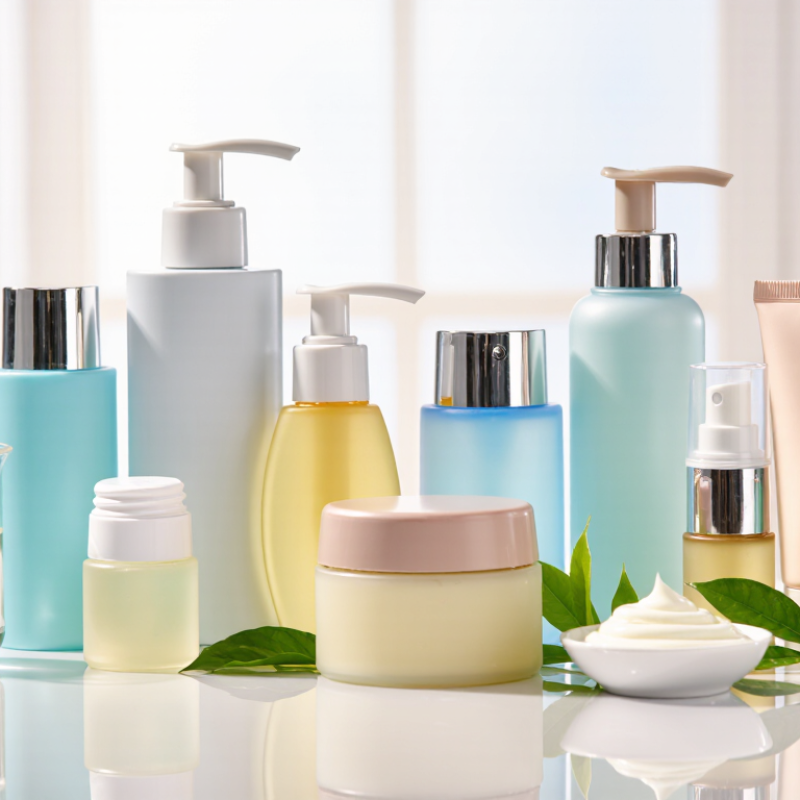
Packaging choices affect handling, cost, and formula performance. A 50 ml airless pump can support controlled dispensing, while a squeeze tube is lightweight and travel-friendly. Check material compatibility, leakage, label readability, and whether the pack protects the formula from light and air. A pump can feel premium, yet its extra components may complicate recycling. That trade-off deserves a real review, not a slogan.
Product development should connect the brief to measurable tests. Agree on target SPF, texture, water-resistance needs, fragrance preferences, and intended markets before sampling. Then assess stability, microbial quality, packaging compatibility, and SPF performance through suitable laboratory testing. Ask suppliers for test methods, batch records, and clear change-control procedures. Small adjustments can shift feel or performance. A rushed sample may look convincing, but it cannot replace repeat testing across production batches.
| Category | Typical Options | Customization and Development Considerations |
|---|---|---|
| SPF protection | Common target levels include SPF 30 and SPF 50; some markets also use SPF 50+ labeling. | The labeled SPF value must be supported by appropriate testing. Permitted claims and labeling rules vary by destination market. |
| UVA protection | Broad-spectrum or UVA-protection claims may be available, depending on the formula and market. | UVA claims require suitable testing and must follow local requirements. SPF primarily describes protection against sunburn-causing UVB radiation. |
| Product formats | Lotion, cream, gel, fluid, stick, and spray formats. | Format affects application feel, dispensing, packaging compatibility, and product testing. Spray products may have additional safety and labeling requirements. |
| Finish and skin feel | Options may include lightweight, moisturizing, matte, non-greasy, or tinted finishes. | Texture, fragrance, tint, and after-feel can be adjusted during formulation development. Claims such as “non-comedogenic” should be substantiated before use. |
| UV filter approach | Mineral, organic, or permitted combinations of UV filters, subject to local regulations. | Allowed filters and maximum concentrations differ between markets. Formula selection should be reviewed against the intended sales regions. |
| Primary packaging | Tubes, bottles, jars, sticks, and compatible spray or pump packs; package sizes can be specified for the target market. | Material, closure, dispensing system, product viscosity, and formula compatibility should be assessed together. Final pack selection should be confirmed through compatibility testing. |
| Packaging materials | Common options include plastic bottles and tubes, laminated tubes, and selected glass or other packaging formats. | Material availability, recyclability, barrier properties, decoration methods, and transport needs can influence the final choice. |
| Branding and decoration | Printed labels, direct printing, color selection, and finishes such as matte or gloss may be considered. | Artwork should allow space for required ingredient lists, directions, warnings, net contents, and market-specific information. |
| Formula development | Development may begin from an existing base formula or proceed through a more tailored brief and sample review. | Product goals, target market, preferred ingredients, sensory profile, packaging, and claim requirements help define the development brief. |
| Testing and quality | Relevant checks can include SPF and UVA testing, stability assessment, microbiological testing, and packaging compatibility evaluation. | Testing scope depends on the product, claims, packaging, and destination market. Confirm required methods and documentation before commercial launch. |
| Regulatory and labeling review | Requirements may cover product classification, ingredient restrictions, claims, directions, warnings, and label format. | Rules differ by jurisdiction and can change. Have the final formula, claims, and artwork reviewed for each intended market. |
| Project planning | Key stages typically include brief preparation, sampling, formula and packaging review, testing, artwork approval, and production planning. | Timing, minimum order quantities, available packaging, and testing schedules depend on the selected product and supplier; confirm them in a written project plan. |
Note: These are general product-development and packaging options, not a supplier-specific offer. Confirm specifications, testing, claims, regulatory compliance, lead times, and order quantities with the selected manufacturer.
Specify the target SPF, texture, finish, packaging, and intended customer. Add target markets and packaging dimensions. Details matter.
Ask for test reports for the exact finished formula. Check the tested batch and laboratory details. A formula sheet alone is not enough.
It lets you assess the lotion’s feel, scent, and dispensing. Test before scaling up. One sample can still mislead.
Look for raw-material checks, batch records, clean filling lines, and retained samples. Ask who handles complaints and formula changes. Clear roles help.
A pump can dispense a light lotion neatly. A squeeze tube is lightweight and travel-friendly. Check for leaks and material compatibility.
Check label readability and protection from light and air. Pumps add components, which may complicate recycling. That trade-off deserves a closer look.
Discuss stability, microbial quality, packaging compatibility, and SPF performance with the supplier. Requirements can vary by market. Do not rush.
Match the formula, packaging, testing scope, and shipping terms before comparing prices. Confirm lead times, minimum quantities, and ownership in writing. I might still miss a detail.
Private label SPF sunscreen manufacturing in China brings together formulation expertise, production capabilities, and product customization. This overview explains how sunscreen formulas are developed to provide the intended level of sun protection, then produced through controlled processes that support consistency from batch to batch. It also highlights the importance of quality testing, ingredient checks, stability assessment, and compliance with applicable requirements in the markets where a product will be sold.
Choosing a manufacturer involves evaluating experience, communication, quality systems, production capacity, and transparency throughout development. Buyers can also explore packaging formats, label and design customization, and options for adapting a product’s texture or finish to their target audience. Understanding these steps helps businesses make informed decisions and collaborate effectively with a manufacturing partner, from early product planning through final packaging.