The 2026 facial serum market will reward private label products built around clear consumer problems, not crowded ingredient lists. Global buyers are watching barrier repair, visible brightening, hydration, and gentle age-support formulas. Private label facial serums may include niacinamide blends, stabilized vitamin C, multi-weight hyaluronic acid, peptide concentrates, bakuchiol, and ceramide-rich barrier treatments.
Perry Romanowski, a cosmetic chemist and co-founder of Chemists Corner, has said, “There are no miracle ingredients in cosmetics.” That warning deserves attention. A serum should support a specific use case, such as reducing tightness after cleansing or improving dull-looking skin over time. Buyers should examine the full INCI list, preservation system, packaging compatibility, stability data, and realistic product claims. A clear glass dropper may look attractive, yet light-sensitive vitamin C often needs more protective packaging.
The strongest 2026 opportunities may sit between clinical language and daily comfort. Fragrance-free formulas can serve sensitive-skin consumers. Lightweight textures suit humid climates. Richer emulsions may perform better in dry regions. Not every trending active deserves a launch. Some formulas become sticky, pill beneath sunscreen, or irritate users when several actives overlap. That is an uncomfortable but useful limitation.
Reliable sourcing also matters. Buyers need documented batch consistency, responsible testing, transparent manufacturing records, and compliant labeling for each target market. A polished bottle is not enough. Performance, safety, and honest positioning will separate dependable Private label facial serums from short-lived trend products.
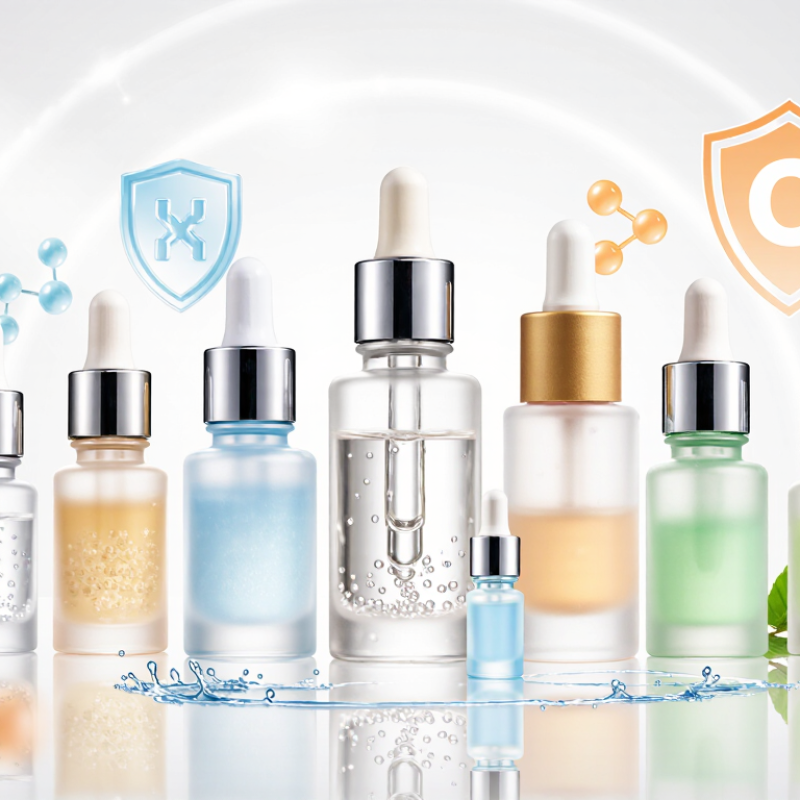
2026 Top Private Label Facial Serum Types Global Buyers Need
Core Facial Serum Types in the 2026 Private Label Market
Private label buyers are prioritizing clear benefits, stable formulas, and simple consumer education. Grand View Research estimates the global facial serum market reached about USD 5.6 billion in 2023, with strong growth expected through 2030. Hydrating serums remain essential. Hyaluronic acid, glycerin, and panthenol support dry or tight-feeling skin. Lightweight textures also suit warmer markets.
Brightening formulas are gaining attention. Vitamin C, niacinamide, and tranexamic acid are common choices for uneven-looking tone. Barrier-support serums are also important, using ceramides, beta-glucan, or ectoin. Peptide serums offer a premium positioning without heavy textures. Retinol and exfoliating acid serums attract experienced users, but they require clearer usage guidance. The right type depends on skin concerns, climate, and local preferences.
Tips: Build a focused range instead of copying every trend. Test viscosity, absorption, scent, and packaging compatibility before launch. Mintel consumer research shows growing interest in ingredient transparency and functional skincare claims. However, “clean” language can become vague. Private label teams should use precise ingredient descriptions and evidence-based claims. Independent stability testing, preservative checks, and compatibility reviews improve reliability. One mistake remains common: choosing a popular ingredient before confirming the target customer’s actual routine.
Start with skin concerns, climate, and the planned dosage format. Water-based formulas need controlled viscosity and reliable preservation. Oil-based formulas need oxidation protection. More active ingredients do not guarantee better results.
Lightweight gels often suit humid regions. Richer emulsions may feel better in dry or cold environments. Test spreadability, tackiness, residue, and absorption time. Texture is not just decoration.
Test the serum with commonly used sunscreen textures. Check whether it rolls, clumps, or leaves uneven patches. Measure absorption time and after-feel. Real consumer testing may reveal problems laboratory checks miss.
Packaging should limit light, oxygen, and repeated contact. Airless pumps can reduce exposure. Their seals and dosage accuracy still require testing. Dark glass may protect sensitive formulas but adds shipping weight.
Request data covering heat, freezing, light, odor, color, pH, and viscosity. Microbiological quality also needs regular evaluation. Transport simulations can reveal leaks or separation. Accelerated testing helps, but it is not a perfect forecast.
Ask for ingredient specifications, batch records, stability results, and microbial testing reports. Preservative effectiveness evidence may also be important. Keep these files available for traceability. Missing paperwork can delay approval.
Labels may need product identity, net contents, ingredients, directions, warnings, and batch details. Shelf-life information and responsible company details may also apply. Language requirements differ between markets. Leave room for translations.
Review manufacturing experience, quality controls, filling equipment, and batch traceability. Confirm minimum order quantities, lead times, customization limits, and defect procedures. Request pilot orders before committing to large production. A polished sample proves very little.
A serum can look stable but oxidize inside an unsuitable package. Test pumps, droppers, seals, and bottles with the actual formula. Check repeated opening and transport conditions. I would not trust appearance alone.
The 2026 private label market offers a wide range of Private label facial serums designed for different skin concerns, including hydration, brightening, firming, soothing, oil control, and barrier support. Successful product development begins by matching active ingredients with consumer needs, such as humectants for moisture, antioxidants for environmental protection, gentle exfoliating agents for texture, and calming ingredients for sensitive skin. Each serum type should also be evaluated for its texture, absorption, compatibility with different packaging formats, and long-term stability under suitable storage conditions.
For global buyers, regulatory compliance and accurate labeling are essential. Product claims, ingredient declarations, usage instructions, warnings, and packaging information should be prepared according to the target market’s requirements. When selecting a private label supplier, buyers should assess formulation expertise, quality control, testing capabilities, production flexibility, minimum order quantities, documentation, and portfolio breadth. A reliable supplier can help create a balanced serum range that supports consistent quality, market adaptability, and clear positioning across multiple regions.