Advanced Sunless Chemistry Modern tanning mousse procurement has evolved far beyond basic bronze colorants. Leading e-commerce, salon, and retail cosmetic brands demand rapid development, authentic golden-olive undertones, zero post-tanning odor, and rapid dry-down without residual stickiness.
In self-tanning mousse manufacturing, the primary reaction is the Maillard reaction, where dihydroxyacetone (DHA) binds with amino acids in the stratum corneum (keratinocytes) to synthesize brown pigments called melanoidins. However, formulating a stable mousse requires overcoming significant chemical hurdles:
- DHA Degradation & Gas Generation: DHA is an unstable polyhydroxy ketone susceptible to heat-induced retro-aldol cleavage into formaldehyde and glycolic acid. Our chemists employ citric/sodium citrate buffers to stabilize bulk solutions at an exact pH range of 3.8 to 4.3, preventing viscosity drops, can-pressure shifts, or odor changes.
- Orange Undertone Neutralization: By coupling natural DHA with fermentation-derived Erythrulose (typically in a 4:1 to 6:1 ratio) and utilizing green, violet, or cool-ash cosmetic guide dyes, our formulations prevent unnatural brassiness and extend fade longevity to 7–10 days.
- Fine Micronized Foam Density: Utilizing non-aerosol foamer pumps fitted with internal dual 100–120 mesh stainless steel screens, we produce a micro-bubble structure that breaks down instantly upon mitt friction, preventing pooling in skin crevices.
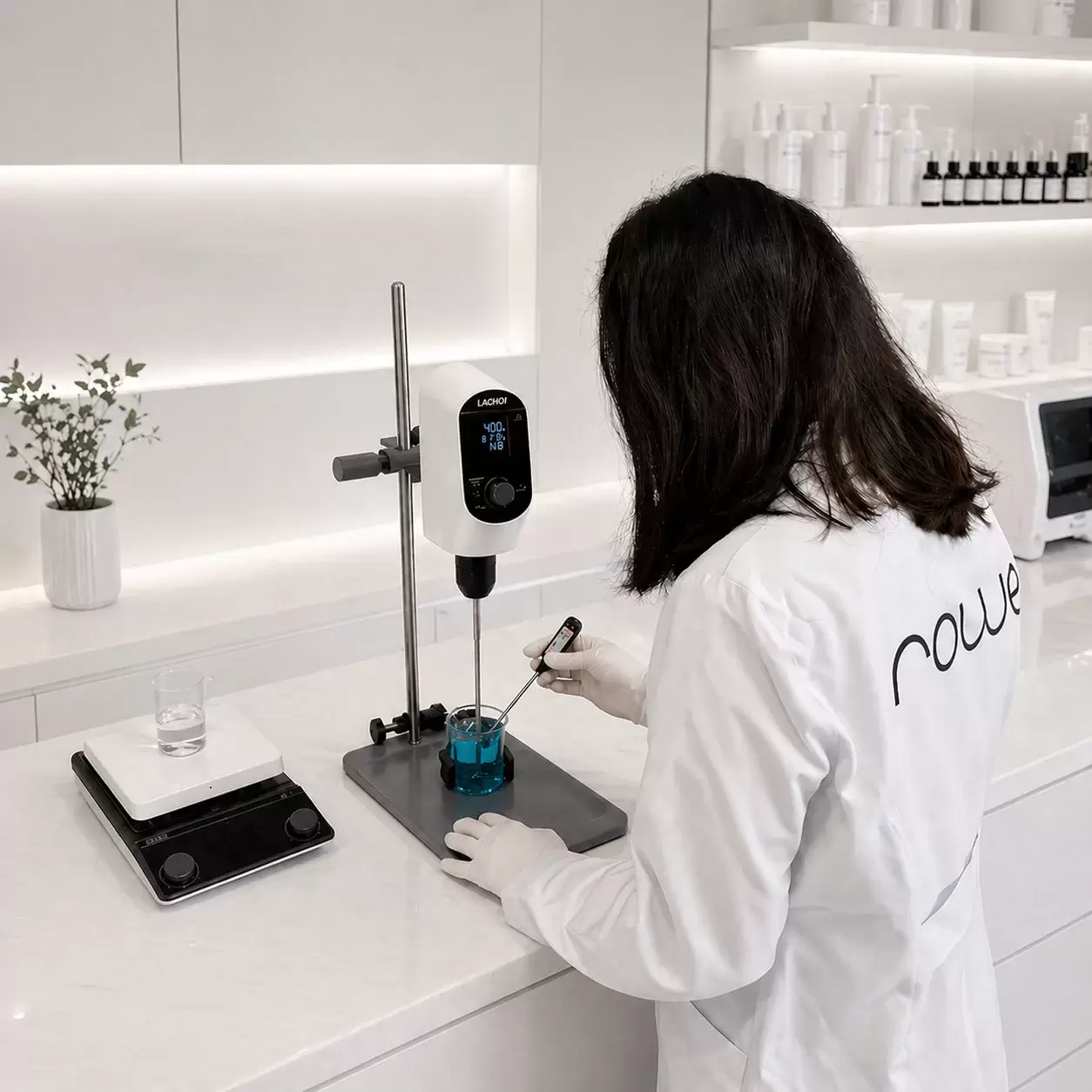
Rowe Cosmetics' in-house R&D chemists handle formulation development, compatibility benchmarking, and thermal accelerated stability tests (at 4°C, 25°C, and 45°C for 12 weeks) completely free of charge for our manufacturing clients.