Industry R&D Shift Keratin Hair Science: The Evolution from Animal Extraction to Precision Biomimicry
The global keratin manufacturing landscape has undergone a tectonic shift. Historically, contract manufacturers relied on hydrolyzing ovine wool or avian feathers via harsh alkaline-acid hydrolysis. While cost-effective, this conventional process frequently resulted in denatured, high-molecular-weight protein aggregates that merely coated the epicuticle, prone to washing down the drain after a single wash cycle while presenting severe vegan and cruelty-free certification barriers.
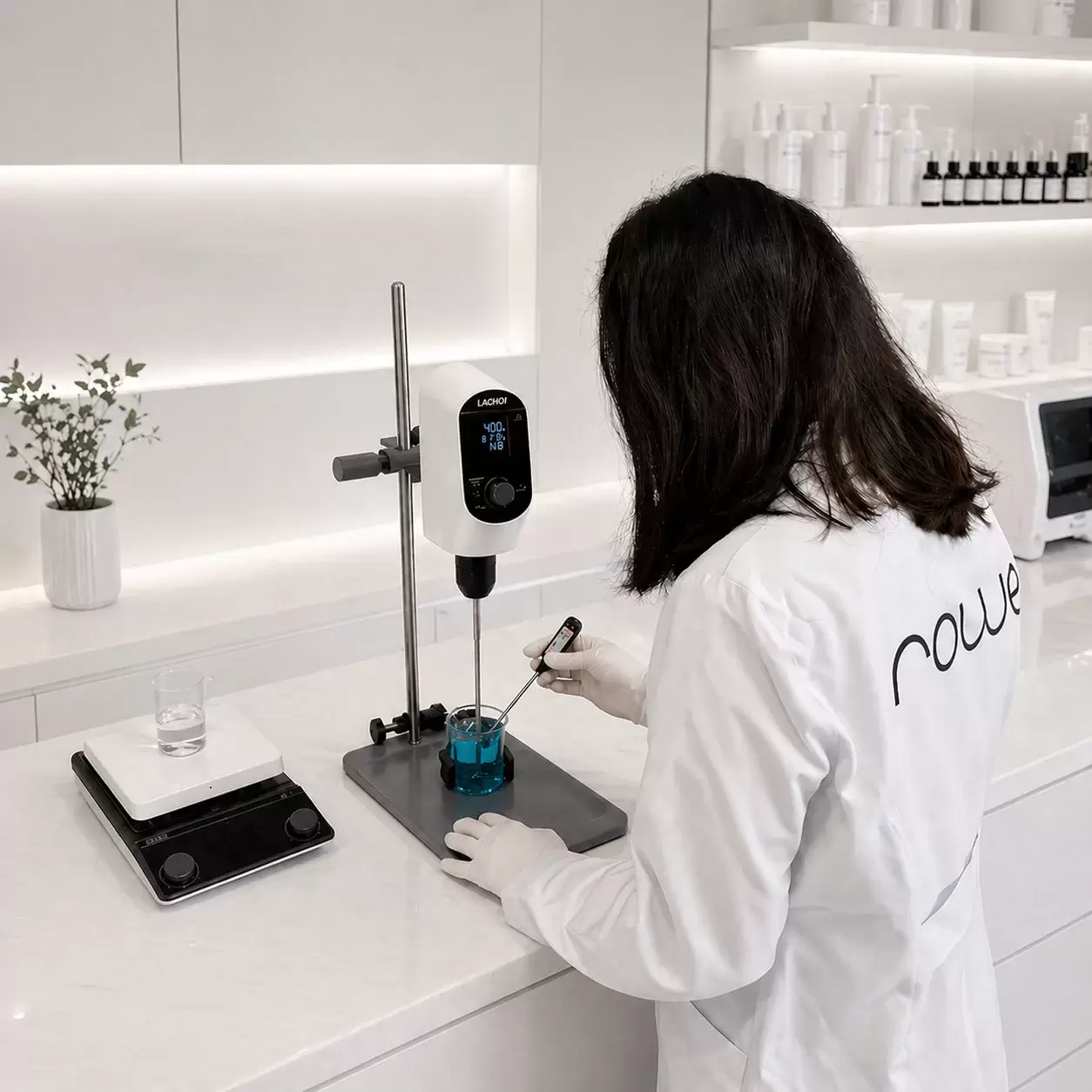
At Rowe Cosmetics, our R&D team in Istanbul formulates with modern biomimetic phyto-keratins. By blending enzymatically hydrolysed peptides derived from non-GMO wheat, soy, quinoa, and fermented peas, our cosmetic chemists replicate the exact 18-amino-acid fingerprint of natural human hair keratin—specifically maintaining optimal ratios of cysteine, proline, and arginine.
Cysteine is the critical sulfur-carrying amino acid responsible for disulfide bonding. By deploying targeted enzymatic cutting techniques, our raw materials achieve average molecular weights between 500 and 1,800 Daltons. At this nanoscale fraction, peptides physically penetrate through damaged cuticle gaps into the inner hair cortex, establishing covalent and ionic anchor points that measurably elevate hair break-load strength and elastic recovery.