0%

China’s cosmetics industry has become a major sourcing destination for brands seeking scalable formulation, filling, and packaging services. Contract cosmetics manufacturing now supports products ranging from facial serums to solid cleansers and sunscreen sticks. However, choosing a reliable partner requires more than comparing factory size or online visibility.

Industry reports show why this sector deserves careful evaluation. McKinsey’s 2023 beauty market analysis projected global beauty sales could approach $580 billion by 2027, with continued growth across skincare, haircare, and personal care. Grand View Research also identifies outsourcing, faster product launches, and specialized production as important drivers of cosmetics contract manufacturing. These trends create opportunities, but they also increase quality and compliance expectations.

This guide examines China’s top 10 contract cosmetics manufacturers through practical criteria. These include formulation capabilities, minimum order quantities, production capacity, packaging integration, export experience, and quality systems. Certifications such as ISO 22716 and credible GMP controls can provide useful evidence, but certificates alone are not enough. Factory audits, batch records, stability testing, and sample consistency still matter.

Public information is incomplete.

Company rankings can change quickly. A large factory may not suit a smaller brand, while a specialized manufacturer may offer better technical support. China’s regulatory environment also requires attention, especially for product filing, ingredient compliance, labeling, and market-specific documentation under NMPA requirements. The following overview therefore aims to support informed comparison, not make an absolute judgment. Buyers should verify current certifications, visit production sites when possible, and request recent quality records before signing a manufacturing agreement.
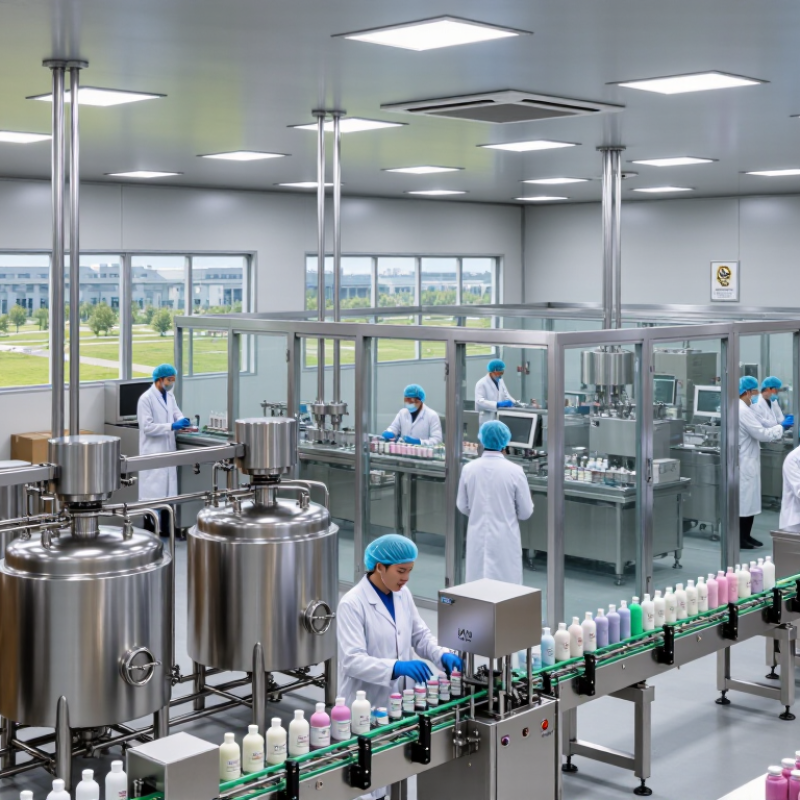
China Top 10 Contract Cosmetics Manufacturers?

What Are Contract Cosmetics Manufacturers in China?

Contract cosmetics manufacturers in China are specialized factories that develop and produce beauty products for other companies. They may handle skincare, haircare, body care, or color cosmetics. In an OEM arrangement, the buyer provides a formula or product concept. The factory then manufactures it under the buyer’s instructions. ODM manufacturers also help create the formula, packaging, and product specifications. The difference can become unclear in real projects.

Their work usually starts with a technical brief. Formulators review texture, ingredients, fragrance, color, and target skin type. Samples are prepared in a laboratory, then tested for stability, compatibility, and safety. A pilot batch may follow before larger production begins. On the factory floor, workers monitor mixing temperature, filling volume, seal quality, and batch records. Quality teams should also manage raw material checks and retain samples.

Reliable sourcing requires more than comparing prices. Buyers should verify manufacturing qualifications, request recent test documents, and review quality-control procedures. A factory visit can reveal practical details, such as storage conditions and equipment cleanliness. Ask how complaints, formula changes, and rejected batches are recorded. A low minimum order quantity sounds attractive, but it may limit testing or consistency. Some suppliers communicate well before payment, then respond slowly during development. That risk deserves attention. Product work rarely moves perfectly; a texture may need reformulation, or packaging may fail a compatibility test. Clear records and honest updates matter more than polished promises.

How Are China’s Top 10 Manufacturers Selected and Ranked?

China Top 10 Contract Cosmetics Manufacturers?

How Are China’s Top 10 Manufacturers Selected and Ranked?

A credible ranking needs more than factory size or online visibility. We assess each manufacturer through verified production capacity, GMP compliance, ISO 22716 systems, formulation expertise, and export experience. Public records, factory audits, certifications, and customer references should support every score. The China National Bureau of Statistics reported that cosmetics retail sales reached about RMB 435 billion in 2023. This growing market increases the need for reliable production partners.

Our ranking model uses five weighted areas. Quality management receives 30%. Research and development receives 25%. Production capacity and delivery reliability receive 20%. Regulatory support receives 15%. Sustainability and transparency receive 10%. These weights reflect findings from Grand View Research and Euromonitor International, which identify innovation, compliance, and supply-chain resilience as major beauty industry drivers. Manufacturers with clear testing records and stable batch control gain higher scores.

The process is not perfect. Private factories may provide limited financial or capacity data. Reported output can also differ from usable capacity. Therefore, we compare documents, audit results, technical interviews, and recent operating evidence. A large facility is not automatically a better partner. Small details matter, such as sealed raw-material storage, traceable batch codes, and retained samples. Rankings should be reviewed annually, because certifications, equipment, and delivery performance can change quickly.

China Top 10 Contract Cosmetics Manufacturers: Selection and Ranking Criteria

A transparent 100-point framework for evaluating contract cosmetics manufacturers in China. The criteria reflect common buyer requirements, including regulatory compliance, quality systems, production capability, research and development, flexibility, and export readiness. The weighting is an editorial evaluation model and does not represent undisclosed company-specific results.

Higher-weighted categories have a greater influence on the final ranking. Regulatory compliance and quality assurance receive the strongest emphasis because they directly affect product safety, market access, and consistency.

What Services Do the Top 10 Manufacturers Provide?

China’s leading contract cosmetics manufacturers now provide more than factory capacity. They support product development from concept to shipment. Grand View Research reported that the global contract manufacturing market was valued at over USD 20 billion in 2023. This growth increases demand for reliable, integrated services.

Their laboratories usually handle formula design, ingredient screening, prototypes, and stability testing. Experienced teams adjust texture, scent, color, and packaging compatibility. They also conduct microbiological checks and safety assessments under cosmetic GMP principles, including ISO 22716 practices.

Regulatory support is another key service. Specialists prepare product files, ingredient documents, labels, and market-specific compliance materials. Details matter here. One missing document can delay a launch.

Production services often include filling, labeling, assembly, warehousing, and export coordination. Many factories offer flexible minimum order quantities, but the meaning of “flexible” varies considerably. Buyers should request written limits. Packaging teams may develop bottles, tubes, cartons, and samples with several material options.

According to the 2024 McKinsey beauty market analysis, consumers increasingly value efficacy, convenience, and sustainability, so manufacturers now provide refill concepts, lighter packaging, and traceability support. Yet sustainability claims require evidence, not attractive wording. Independent audits, batch records, inspection reports, and retain samples help verify quality. Some suppliers move quickly; others communicate better. A careful buyer should examine both.

How Do the Top 10 Chinese Manufacturers Compare?

Comparing China’s top 10 contract cosmetics manufacturers requires more than checking factory size. Grand View Research projects the global cosmetics contract manufacturing market to grow at about 6.7% annually through 2030. That growth increases supplier choice, but it also makes verification harder. A credible comparison should examine formulation expertise, minimum order quantities, lead times, testing, and export experience.

The strongest manufacturers usually provide in-house laboratories, pilot batches, stability testing, and documented quality systems. ISO 22716 alignment is useful, while China’s NMPA requirements add another compliance layer for domestic sales. Some factories excel at skincare emulsions. Others perform better with color cosmetics, powders, or fast sample development. These differences matter more than a simple production-capacity ranking.

Cost remains important, but the lowest quotation can hide higher testing or packaging expenses. Procurement teams should request recent audit records, batch-traceability examples, and realistic production schedules. The United Nations Comtrade database shows China remains a major cosmetics exporter, yet export volume does not prove equal manufacturing quality. That is an uncomfortable limitation. Public rankings often rely on incomplete data, and factory performance can change after new equipment, staff turnover, or regulatory updates. Small trial orders reveal more than polished presentations. A balanced top-ten comparison should therefore reward evidence, responsiveness, and technical consistency—not advertising strength.

How Can Brands Choose the Right Contract Cosmetics Manufacturer?

Choosing among China’s top contract cosmetics manufacturers requires more than comparing product catalogs. A glossy facility is not enough. Brands should inspect manufacturing experience, quality systems, and technical records. Look for documented GMP procedures, trained operators, controlled storage, and clear batch-tracking practices. Request recent audit evidence when possible. Certificates should be verifiable, current, and relevant to the products being developed.

Ask how the manufacturer handles formulation, stability testing, preservative testing, and packaging compatibility. A reliable partner should explain each stage in plain language. Request small samples before discussing large production volumes. Compare texture, fragrance, color, filling accuracy, and label application. Confirm minimum order quantities, lead times, and raw material sources. Do not accept vague promises. They create expensive delays later.

Communication deserves careful testing. Send the same technical questions to several factories and compare their answers. Notice who identifies risks instead of promising everything. Review contracts for quality standards, confidentiality, ownership of formulas, rejected batches, and change-control procedures. Production problems can happen, even with experienced teams. What matters is the response: documented investigation, corrective action, and transparent reporting. I would also visit the site, but one visit cannot prove long-term consistency. Ask for retained samples, inspection records, and evidence from previous comparable projects. A lower quotation may hide weaker testing, unstable supply, or costly rework. Choose the manufacturer whose process remains clear when details become difficult.

China Top 10 Contract Cosmetics Manufacturers? – How Can Brands Choose the Right Contract Cosmetics Manufacturer?

Profile Main Manufacturing Hub Core Product Categories Typical MOQ Sample Lead Time Bulk Production Lead Time Quality and Compliance Focus Customization Capability Common Export Coverage Best Fit
Profile 01 Guangzhou, Guangdong Skin care, facial masks, cleansers, serums 1,000–3,000 units 7–15 days 30–45 days ISO 22716-aligned GMP controls, stability testing, batch traceability Private label, stock formulas, fragrance and texture adjustments North America, Europe, Southeast Asia Emerging skin-care brands
Profile 02 Shenzhen, Guangdong Color cosmetics, lip products, eye makeup, complexion products 3,000–10,000 units 10–20 days 35–60 days Color consistency checks, microbiological testing, packaging inspection Shade development, component matching, artwork and packaging support United States, Canada, Australia, Europe Makeup and trend-led launches
Profile 03 Dongguan, Guangdong Hair care, shampoos, conditioners, scalp treatments 2,000–5,000 units 7–14 days 30–50 days Viscosity testing, preservative efficacy testing, filling-line controls Sulfate-free, silicone-free and botanical formulation options Asia-Pacific, Middle East, Europe Salon and professional hair-care lines
Profile 04 Ningbo, Zhejiang Body care, lotions, scrubs, shower products 3,000–8,000 units 10–18 days 35–55 days GMP production procedures, incoming-material checks, finished-product release Fragrance selection, packaging formats, label and carton coordination Europe, North America, Latin America High-volume everyday products
Profile 05 Yiwu, Zhejiang Gift sets, travel-size cosmetics, promotional items 1,000–5,000 units 7–14 days 25–45 days Packaging quality control, assembly inspection, lot identification Set assembly, decorative packaging and small-format product development Global e-commerce and promotional markets Seasonal and gift-oriented collections
Profile 06 Hangzhou, Zhejiang Clean beauty, botanical skin care, essential-oil products 1,000–3,000 units 14–21 days 40–70 days Ingredient documentation, allergen review, stability and compatibility testing Plant-based formulas, vegan options and recyclable packaging support Europe, North America, Australia Premium and environmentally focused brands
Profile 07 Shanghai, China Dermocosmetics, sensitive-skin care, sun-care products 3,000–10,000 units 14–28 days 45–75 days Preservative testing, safety assessment, stability and packaging compatibility Active-ingredient selection, claim support and regulatory documentation Europe, Asia-Pacific, Middle East Science-led skin-care products
Profile 08 Xiamen, Fujian Personal care, deodorants, hand and foot care 2,000–6,000 units 10–18 days 30–50 days Microbiological testing, odor evaluation, filling and sealing controls Fragrance customization, aerosol-free formats and convenient packaging Southeast Asia, Middle East, Africa Mass-market personal care
Profile 09 Suzhou, Jiangsu Professional skin care, spa products, treatment masks 2,000–8,000 units 14–21 days 40–65 days Controlled batching, raw-material qualification, product performance testing Treatment protocols, professional-use formats and customized textures Europe, North America, East Asia Clinics, salons and spa channels
Profile 10 Qingdao, Shandong Soap, cleansing bars, solid cosmetics, low-water products 3,000–10,000 units 10–20 days 35–60 days Moisture testing, weight consistency, hardness and packaging inspection Mold design, scent customization, paper-based and plastic-free packaging Europe, North America, Australia, Japan Sustainable solid-product ranges
Selection checklist: Verify the manufacturer's current certifications, product-safety documentation, ingredient traceability, minimum order quantity, sample approval process, testing scope, intellectual-property terms, production capacity, regulatory support and export experience before signing a contract. Lead times and MOQs vary according to formula complexity, packaging, testing requirements and order volume.

FAQS

What are contract cosmetics manufacturers in China?

They develop and produce skincare, haircare, body care, and color cosmetics for other companies. Some manufacture supplied formulas. Others create formulas, packaging, and specifications.

What is the difference between OEM and ODM production?

OEM production follows the buyer’s formula or product concept. ODM production includes more factory support, such as formulation and packaging design. In practice, the difference can become unclear.

How does the product development process usually work?

It begins with a technical brief covering texture, ingredients, fragrance, color, and target skin type. Laboratories prepare samples and test stability, safety, and packaging compatibility. A pilot batch may follow. Textures sometimes need reformulation.

What quality checks should buyers expect?

Factories should inspect raw materials and monitor mixing temperature, filling volume, seals, and batch records. Quality teams should retain samples for later comparison. Details matter.

How can buyers evaluate a manufacturer before placing an order?

Buyers should review manufacturing qualifications, recent test documents, quality procedures, and factory conditions. A visit may reveal dirty equipment or poor storage. Online promises are not enough.

How are leading manufacturers commonly ranked?

Rankings may assess quality systems, research ability, production capacity, delivery reliability, regulatory support, sustainability, and transparency. Verified documents and audits should support the scores. The method is not perfect.

What services can a full-service manufacturer provide?

Services may include formulation, ingredient screening, prototypes, stability testing, filling, labeling, assembly, warehousing, and export coordination. Some also prepare labels and compliance documents for specific markets. One missing document can delay launch.

Why should buyers examine minimum order quantities and communication?

A low minimum order quantity may reduce initial costs, but it can limit testing or batch consistency. Communication may also weaken after payment. Clear records and honest updates matter. Small gaps hurt.

Conclusion

China’s top 10 contract cosmetics manufacturers are selected by evaluating their production capabilities, product quality, facility standards, research and development expertise, regulatory awareness, customization options, delivery reliability, and customer support. Contract cosmetics manufacturing allows beauty and personal care companies to outsource formulation, testing, production, filling, packaging, and related services while focusing on product planning and market development. The leading manufacturers typically support a wide range of cosmetic formats and can adapt their services to different order volumes, product concepts, and packaging requirements.

Although these manufacturers may offer similar services, they can differ in specialization, minimum order quantities, technology, development speed, pricing, and communication efficiency. Brands should compare each supplier’s technical strengths, quality-control procedures, certifications, production capacity, sampling process, transparency, and ability to meet project timelines. The right partner should provide consistent quality, clear documentation, flexible cooperation, and dependable long-term support that matches the brand’s product goals and business scale.


Elara

Elara

Elara is a seasoned marketing professional dedicated to helping businesses understand products, markets, and meaningful customer experiences. With a strong command of the company’s solutions, she transforms complex product features into clear, practical insights that support informed decisions and......