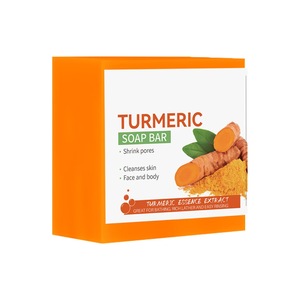
Engineered under strict ISO 22716 Good Manufacturing Practices. Explore our commercially vetted, multi-market compliant base formulations—customizable by active concentrations, rheology, molecular vectors, and secondary packaging formats.
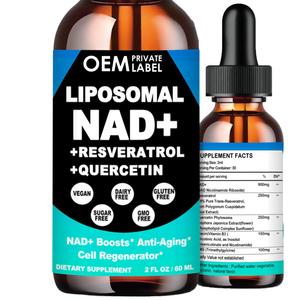
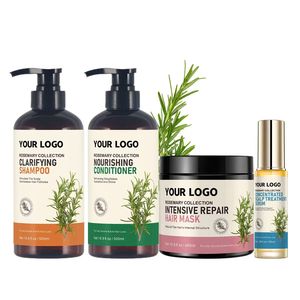
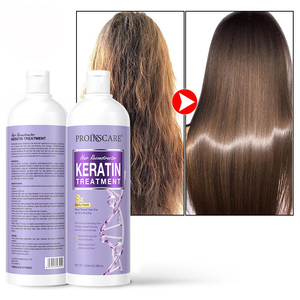
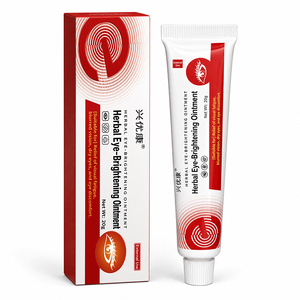
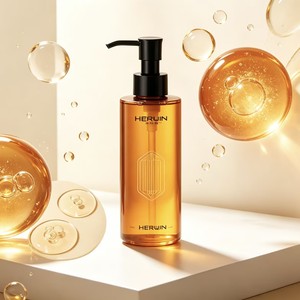
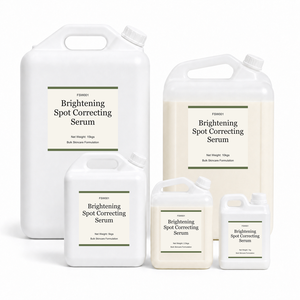
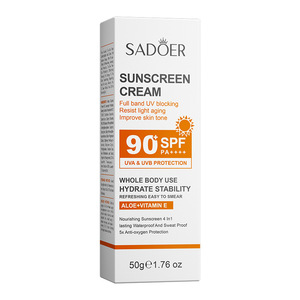
Operating dedicated cleanrooms and state-of-the-art analytical testing facilities, we convert breakthrough cosmetic science into regulatory-cleared commercial skincare inventories.
We remove the cost barrier for brand innovation. Our senior cosmetic chemists provide agile formula modification, target texture reproduction, and micro-batch sampling free of charge for contract production clients.
Every batch of serum, cream, or active concentrate is compounded in Class 100,000 cleanrooms under rigorous Good Manufacturing Practice standards, ensuring ultra-low bioburden, batch consistency, and absolute safety.
Prevent formula oxidation and pump failure. We source and validate primary packaging—including airless pumps, amber glass droppers, dual-chamber ampoules, and nitrogen-sealed dosing systems—against stress cracking and active degradation.
Accelerate your market approvals. We furnish complete technical dossiers including Cosmetic Product Safety Reports (CPSR Part A & B), Certificate of Analysis (COA), Safety Data Sheets (SDS), stability records, and INCI ingredient compliance trees.
We operate strictly as an industrial contract manufacturer—we do not market direct-to-consumer brands or compete on retail shelves. Your proprietary custom formulas, trademark assets, and supply agreements are safeguarded by binding non-disclosure agreements.
Experienced in worldwide distribution across North America, the European Union, the United Kingdom, and the GCC region. Our export division manages palletization, moisture-barrier wrapping, hazardous cargo certification, and door-to-door forwarding.
An Industrial Procurement Whitepaper on Molecular Stabilization, Bio-Carrier Vectors, and Cosmeceutical Scaling
In the contemporary skincare marketplace, facial serums represent the apex of dermatological efficacy and brand value perception. Unlike standard emulsions or cleansing washes, a high-performance facial serum operates as a targeted vector for high concentrations of physiologically active compounds. For international brand founders, medical spas, and multinational beauty conglomerates, selecting a qualified China wholesale custom serum formulation manufacturer requires an analytical understanding of carrier chemistry, active stabilization, and scale-up thermodynamics.
The primary limitation of topical active compounds is the epidermal stratum corneum, which serves as an evolutionary barrier against hydrophilic solutes. Our custom serum manufacturing protocols address this obstacle through advanced supramolecular chemistry and nano-carrier technologies:
Based on extensive laboratory stability trials and worldwide retail transaction volume, our R&D engineering team recommends five high-demand serum categories for turnkey or custom formulation procurement:
| Formulation Archetype | Target Actives & Concentrations | Stabilization Mechanism | Ideal Primary Packaging | Recommended Skin Indications |
|---|---|---|---|---|
| High-Potency Longevity Serum | 0.5%–1.0% Liposomal NAD+, 1% Resveratrol, 0.2% Quercetin | Phospholipid bilayer suspension, nitrogen head-space purge | Amber/Cobalt UV-blocking dropper or airless pump | Cellular senescence, photo-damage, loss of elasticity |
| Clinical Pigment Corrector | 10% Niacinamide, 2% Alpha-Arbutin, 3% Tranexamic Acid | pH buffered to 5.5–6.0 to prevent nicotinic acid conversion | Opaque glass dropper or airless cartridge | Post-inflammatory hyperpigmentation, melasma, uneven tone |
| Biomimetic Peptide Lift Concentrate | Copper Tripeptide-1, Matrixyl 3000 (3%), Argireline (5%) | Cold-process secondary phase addition (<40°C) | Precision piston dropper bottle | Expression lines, dermal thinning, structural sagging |
| Antioxidant Tri-C Flash Serum | 15% L-Ascorbic Acid, 1% Alpha-Tocopherol, 0.5% Ferulic Acid | Low-water polyol solvent matrix (pH <3.2) | UV-coated double-chamber or vacuum syringe vial | Free-radical damage, dullness, environmental exposure |
| Centella & Ectoin Soothing Serum | 5% Centella Asiatica Titrated Extract (TECA), 2% Ectoin | Micro-encapsulated triterpene dispersion | Dropper vial with medical-grade silicone bulb | Rosacea, erythema, impaired barrier, post-laser recovery |
A frequent hazard encountered when transitioning a cosmetic formula from a 500-milliliter laboratory beaker to a 2,000-liter stainless steel industrial homogenizer is shear-induced denaturation and thermal degradation. At our ISO 22716 certified manufacturing facility, our mixing tanks utilize computerized counter-rotating scrapers with variable-frequency vacuum high-shear homogenizers.
Temperature-sensitive ingredients—including live bacterial lysates, pure plant stem cell extracts, peptides, and botanical polyphenols—are introduced via aseptic automated injection ports only after the primary chassis has cooled below 38°C. Furthermore, to combat oxidative degradation of ascorbic acid and retinol formulations, our production lines are equipped with continuous dissolved oxygen purging and deionized nitrogen gas blanketing across the bulk vessel, intermediate storage tanks, and automated filling hoppers.
How global brand managers, e-commerce beauty leaders, and pharmaceutical procurement directors are navigating the next cycle of cosmetic contract manufacturing.
Buyers are shifting away from decorative herbal claims in favor of verified clinical actives backed by human in-vivo and ex-vivo clinical efficacy trials. Pure synthetic biology actives like recombinant collagen and bio-fermented peptides are replacing unrefined plant extracts.
Rather than standard deionized aqua making up 80% of the formula, brands demand chassis formulated with nutrient-dense bio-ferments, such as Galactomyces, Birch Sap, or Rice Ferment Filtrate, dramatically maximizing marketing narrative and active concentration.
Modern brand scaling models rely on test-and-learn product launches. Brands demand manufacturers capable of providing pilot production runs (1,000–3,000 units) with rapid transition into mass-scale runs (50,000–200,000 units) on identical filling hardware.
Regulatory requirements across the EU and North America mandate circular packaging. Procurement teams are moving away from multi-material dropper assemblies toward 100% recyclable mono-material pumps, PCR glass, and refillable inner serum cartridges.
Ensuring Frictionless Worldwide Importation Through Pre-Market Compliance Engineering
Bringing a custom serum formulation to market is no longer solely a matter of aesthetic elegance; it is an exercise in rigorous regulatory conformity. In today's cross-border supply chain, non-compliant labelling, unlisted allergens, or non-approved preservative systems can result in port-of-entry container seizures, costly recalls, and catastrophic brand liability.
With the full implementation of MoCRA by the US FDA, contract manufacturers and brand owners face unprecedented transparency requirements. As a premier Chinese manufacturing partner, our operations provide full institutional compliance:
The European cosmetic framework remains the global gold standard for consumer safety. Formulations designated for the European or British markets are engineered to comply with Article 10 safety assessments:
For clients targeting the rapid growth of the GCC (Saudi Arabia, UAE, Qatar, Kuwait), we maintain dedicated raw material screening excluding porcine or ethanol derivatives. Our factory maintains accredited Halal manufacturing protocols and supports compliance with the Saudi Food and Drug Authority (SFDA) eCosma system and ESMA conformity evaluations.
From technical brief through industrial compounding to global ex-factory dispatch, your custom serum project is guided by disciplined phase-gate milestones.
We analyze your targeted market claims, sensory specifications, active concentrations, benchmark reference products, price-per-kilogram constraints, and geographical regulatory objectives.
Our in-house cosmetic chemists formulate initial bench prototypes. We optimize viscosity, absorption speed, skin feel, and odor, dispatching iterative prototype samples for your internal sensory review.
Once your formula is approved, we execute accelerated 90-day thermal stability (at 4°C, 25°C, 45°C, and 50°C), freeze-thaw cycle testing, PET challenge checks, and packaging pump compatibility tests.
Scalability verification in our automated vacuum homogenization vessels. We calibrate shear velocities, cooling rates, and active compounding sequence to preserve molecular integrity.
Compounded serums are fed to automated monoblock filling lines under Class 100,000 cleanroom air filtration. Automated nitrogen dosing, torque-controlled capping, laser lot-coding, and carton boxing ensure perfection.
Analytical QA tests verify specific gravity, pH, viscosity, and microbial purity. Once final COAs are generated, palletized goods are wrapped in heavy-duty export containers for air or ocean transit.
Straightforward, engineering-level answers to critical technical, financial, and logistical procurement questions.
Our standard production MOQ for fully custom formulations starts at 3,000 units per SKU, depending on bottle volume (e.g., 30ml vs. 50ml) and primary packaging availability. For turnkey catalog formulations utilizing in-stock standardized bottles, pilot runs can be accommodated as low as 1,000 units. For mass enterprise production runs, our facility routinely manufactures batches exceeding 50,000 to 200,000 units per month.
No. We provide complimentary laboratory formulation and iterative sample refinement for qualified contract manufacturing partners. You only cover express courier shipping costs for the physical prototypes. If your project demands exceptionally rare, proprietary, or custom-synthesized raw active peptides, those direct material acquisition costs are quoted transparently prior to lab synthesis.
When you partner with us for bespoke custom development, you retain full commercial ownership of your finished trade product. We sign legally binding mutual Non-Disclosure Agreements (NDAs) prior to project review. Full quantitative formula ownership transfer options are clearly outlined in our custom contract manufacturing service agreements.
We employ a multi-layered anti-oxidation stabilization methodology. This includes: (1) Formulating within waterless anhydrous glycols or micro-emulsion lipid carriers; (2) Utilizing synergistic antioxidant stabilization triads (e.g., Vitamin C + Vitamin E + Ferulic Acid); (3) Deoxygenating water phases via vacuum deaeration and blanketing holding tanks with inert nitrogen gas; and (4) Recommending opaque, oxygen-barrier airless bottles or nitrogen-purged ampoules.
Yes. Our cosmetic reverse-engineering laboratory can analyze physical benchmarks, sensory attributes, rheology, refractive index, and INCI ingredient declarations. We reproduce target skin-feel, hydration profiles, and active performance while reformulating without problematic stabilizers (e.g., parabens, synthetic fragrances, or cyclic silicones) to meet your clean beauty standards.
All commercial formulas undergo a standardized 12-week stability battery across controlled environmental chambers: 4°C, 25°C (ambient), 40°C, and 45°C/75% relative humidity, alongside freeze-thaw cycle testing (-10°C to +40°C across 5 cycles). We monitor phase separation, emulsion coalescence, active potency decay, preservative efficacy (ISO 11930 PET), and container-closure interaction.
We supply an exhaustive technical export compliance package including: Complete Certificate of Analysis (COA) for both bulk and finished units, Safety Data Sheets (SDS) in accordance with GHS standards, quantitative formulation disclosures, Certificate of Free Sale (CFS), Good Manufacturing Practice (ISO 22716) certificates, heavy metal and microbiological analytical assays, and stability summary reports.
Once your formula prototype and packaging artwork are formally approved, initial bulk production, microbial testing, automated filling, and secondary packaging boxing generally require 25 to 35 business days. Repeat reorders with pre-printed or stock packaging can be accelerated to 15 to 20 business days to support agile e-commerce supply chain replenishment.
Yes. We provide turnkey primary and secondary packaging procurement. We maintain direct industrial partnerships with premier glass, aluminum, and mold manufacturers. Whether you require heavyweight Italian-style flint glass dropper bottles, precision push-button droppers, PCR airless pumps, silk-screen hot stamping, or FSC-certified biodegradable cartons, our packaging team coordinates everything seamlessly.
Our manufacturing line relies on digitalized SCADA process controls that automate raw material batching by weight, monitor heating and cooling ramp rates within ±0.5°C tolerances, and regulate rotor-stator shear RPMs. Every batch is evaluated against an authorized master standard for viscosity (Brookfield viscometer), pH, specific gravity, colorimeter chromaticity, and HPLC active concentration.
Partner directly with a certified, research-driven manufacturing facility. Share your target product concept, active ingredient priorities, and volume projections—our cosmetic chemists and international export specialists will reply with concrete formulation architectures, stability frameworks, and transparent B2B wholesale pricing.