
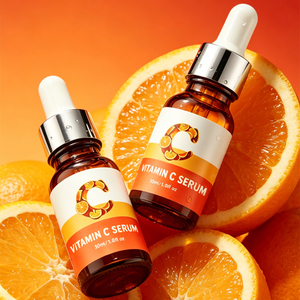
Explore production-ready private label and OEM serums engineered with high-efficacy active ingredients, clinical stability profiles, and global market compliance.
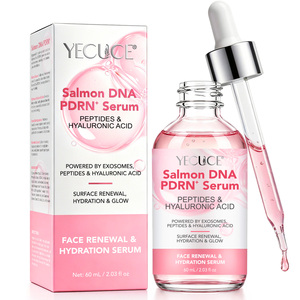
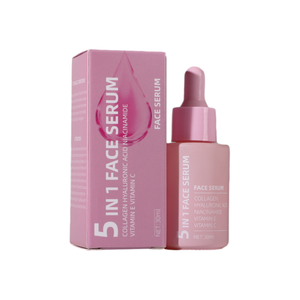
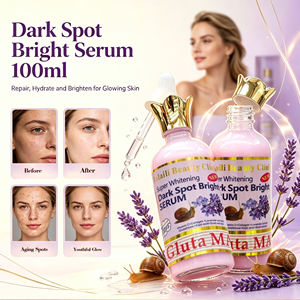
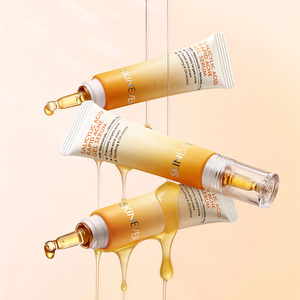
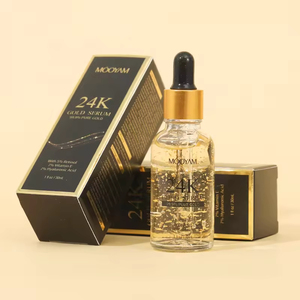
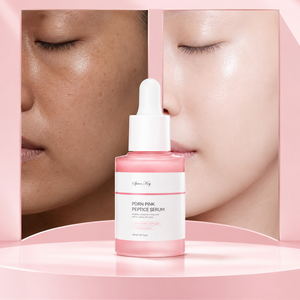
In-depth supply-side analysis covering formulation stability, multi-regional regulatory harmonisation, and supplier audit criteria for international cosmetics brands.
Facial serums represent the highest gross-margin segment in commercial skincare. The contemporary market has matured beyond basic single-molecule solutions (such as standalone 2% hyaluronic acid) toward complex bio-active delivery engines. Sourcing managers must now scrutinize the bio-availability, molecular weight distribution, and encapsulation integrity of raw ingredients.
For instance, modern Vitamin C formulations must address rapid oxidation. Top-tier suppliers stabilize sensitive compounds via micro-encapsulation, liposomal suspensions, or anhydrous suspension chemistry, ensuring that terminal potency matches stated label claims after transcontinental container transit.
A primary bottleneck in scaling wholesale serums lies in differing regulatory jurisdictions. Procurement teams must navigate conflicting ingredient restrictions between the European Commission, the US FDA (MoCRA), and the Saudi/UAE SFDA frameworks.
The global contract manufacturing paradigm is undergoing rapid transformation governed by three foundational pillars:
Evaluate production paths to optimize your speed-to-market, capital expenditure, and intellectual property ownership.
| Procurement Vector | Private Label (ODM) | Contract Manufacturing (OEM) | Custom Formulation (Bespoke R&D) |
|---|---|---|---|
| Formula Base | Pre-tested, off-the-shelf stability library | Client-supplied master INCI specification | Formulated de novo by cosmetic chemists |
| Speed to Market | Rapid (3 to 6 weeks) | Moderate (8 to 12 weeks for transfer) | Extensive (16 to 28 weeks stability testing) |
| R&D Development Fee | Zero cost / Included | Scale-up pilot batch charge | Free R&D for qualified volume commitments |
| Regulatory Documentation | Instant access to existing dossiers | Tech dossier audit required | Full safety dossier generation & testing |
| Primary Application | Fast trend-capture & range expansion | Dual-sourcing & facility migration | Proprietary hero product exclusivity |
Operating at the crossroads of European compliance standards and Eurasian logistics efficiency, our Esenyurt, Istanbul plant provides end-to-end manufacturing infrastructure.
Every phase of manufacturing occurs under rigorous cleanroom conditions. Continuous automated inline visual inspection, clean-in-place (CIP) sanitization, and automated torque-controlled capping ensure batch reproducibility.
We source active components directly from premier European chemical synthesized houses, verifying purity assays, heavy metal absence, and microbial thresholds before compounding starts.
Located in Istanbul, Turkey, our export channels allow road freight directly into Central and Western Europe within 3 to 6 transit days, avoiding maritime congestion and cutting logistics overhead.
We operate exclusively as a contract manufacturer and formulation partner. We do not own consumer-facing retail brands, ensuring complete confidentiality for your formulas, customer base, and market positions.
Essential operational, regulatory, and technical considerations for procurement officers and brand founders.
Every wholesale formulation undergoes accelerated stability testing in thermal chambers (at 40°C, 45°C, and cycling 4°C/40°C) for 12 weeks, replicating 24 to 36 months of real-world ambient shelf-life. We inspect centrifuge phase separation, pH drift, viscosity shifts, and photo-reactivity under intense UV exposure.
Low-pH formulations (such as Salicylic Acid BHA or Glycolic Acid AHA) and volatile active serums can degrade pipette bulb elastomers or interact with soda-lime glass. We run compatibility testing evaluating elastomer extraction, dispensing precision, and leaching using inert Type I borosilicate glass or coated airless containers.
Because our automated compounding vessels range from 50kg pilots to 1,000kg commercial batch reactors, MOQs are flexible. Standard private label serums using stock packaging start at accessible pilot thresholds, while fully custom packaging components typically require 5,000 to 10,000 units.
Yes. We furnish comprehensive documentation including Certificates of Analysis (CoA), Safety Data Sheets (SDS), INCI quantitative breakdowns, microbial challenge testing (PET), and GMP manufacturing verification. This provides your appointed Responsible Person (RP) with all technical data needed for smooth submission.
Yes. Our in-house analytical lab can perform reverse-engineering on benchmark formulations based on quantitative INCI breakdowns, sensory profiling, and target active concentrations. We often improve benchmark formulas by replacing irritant preservation systems with cleaner, hurdle-technology alternatives.
Our quality control operates at three distinct checkpoints: incoming raw material verification (FTIR identity, assay, bio-burden), in-process production checks (pH, specific gravity, viscosity, aeration limits), and post-packaging finished product release (seal integrity, vacuum leak testing, fill-weight verification).
Consult with our cosmetic chemists and export specialists to obtain regulatory-compliant formulations, packaging prototypes, and factory-direct pricing for your brand.