Explore our export-ready, clinically verified catalog spanning broad-spectrum SPF shields, regenerative cell treatments, high-potency dark spot correctors, and bioactive anti-photoaging complexes.
Units daily output capacity powered by fully automated high-precision emulsifying and vacuum filling lines.
Units packaged per month with strict batch-to-batch consistency and automated inline optical inspection.
Export-cleared base formulas spanning invisible SPF fluids, mineral shields, multi-peptides, and derma toners.
Raw UV filters and functional excipients sourced from certified global and Tier-1 European specialty chemical producers.
Combining state-of-the-art cleanroom environments, strict ISO 22716 GMP standards, and free in-house R&D custom formulation services to accelerate your international market clearance.
Our production facilities operate strictly under ISO 22716 Cosmetics Good Manufacturing Practices and ISO 9001 quality systems. Every sunscreen lot undergoes exhaustive bioburden testing, heavy metal assays (ICP-MS), and automated weight-variance checks before release.
Sun protection demands complex emulsion chemistry. Our dedicated cosmetic chemists formulate custom non-greasy, fast-absorbing matrixes utilizing high-purity filters that resist photo-degradation, ensuring your label SPF and Broad Spectrum claims hold true under intense UV exposure.
We actively export compliant personal care items to the United States, EU, UK, GCC countries (Saudi Arabia, UAE), and Southeast Asia. We supply comprehensive Product Information Files (PIF), Cosmetic Product Safety Reports (CPSR), and complete technical dossiers for seamless customs clearance.
The global sun care market has undergone a fundamental paradigm shift. Historically regarded as a seasonal vacation commodity, sunscreen has cemented its status as an indispensable daily dermatological therapeutic. Suncare formulations today bridge the gap between photobiology, cellular longevity, and aesthetic elegance. International brand procurement managers face complex formulation challenges: consumers now reject heavy, chalky, greasy chemical pastes in favor of ultra-fluid, invisible, non-comedogenic serums that deliver verified broad-spectrum protection against Ultraviolet A (320–400 nm), Ultraviolet B (290–320 nm), High-Energy Visible (HEV/Blue Light, 400–500 nm), and Infrared-A (IR-A) irradiation.
"Procurement directors no longer buy merely an SPF number. They invest in sensory architecture, filter photo-stability, endocrine disruptor avoidance, reef safety, and immediate regulatory approval across divergent supranational jurisdictions."
A high static Sun Protection Factor (SPF) calculated on paper is worthless if the cosmetic emulsion fails to establish a continuous, homogeneous, elastic film across microscopic skin micro-reliefs upon application. In our research and production laboratories, we deploy state-of-the-art polyurethane-based and acrylate copolymer film-formers. These advanced polymers anchor UV absorbing filters in an ultrathin, flexible lattice over the stratum corneum. This mechanism prevents filter migration into sweat glands, stops particulate agglomeration, and maintains water resistance (up to 80 minutes under ISO 16217 standards) while completely eliminating the traditional oily residue typical of legacy sunscreens.
Formulating chemical (organic) sunscreens demands deep knowledge of excited singlet-triplet energy states. A notorious challenge in classical formulations is the rapid photodegradation of Avobenzone (Butyl Methoxydibenzoylmethane) when exposed to UV radiation. To engineer superior stability without introducing toxic stabilizers, our chemists harness advanced filter cascades. By pairing modern organic filters (such as Bis-Ethylhexyloxyphenol Methoxyphenyl Triazine / Tinosorb S and Diethylamino Hydroxybenzoyl Hexyl Benzoate / Uvinul A Plus) with natural singlet oxygen quenchers and carotenoid complexes, we consistently achieve formulations where over 95% of active photoprotective capacity is retained after 4 hours of intense solar irradiation.
| Filter Category | Dominant Active Filters | Absorption Spectrum | Sensory Profile | Regulatory Landscape |
|---|---|---|---|---|
| Organic / Chemical Filters | Ethylhexyl Methoxycinnamate, Avobenzone, Homosalate, Octocrylene | UVB (290-320nm) & Partial UVA | Lightweight, water-like, transparent on all skin tones | Traditional OTC Facing regional bans in Hawaii & Palau due to coral toxicity concerns. |
| Inorganic / Mineral Filters | Micro-fine Zinc Oxide (ZnO) & Titanium Dioxide (TiO2) | Broad-Spectrum (290-380nm) + HEV Light | Historically viscous; modern dispersion tech provides smooth velvet skin-feel | Reef-Safe Global Universally accepted as safe by US FDA GRASE and EU SCCS. |
| Modern Hybrid Formulations | Tinosorb S/M, Uvinul A Plus, Encapsulated Mineral Particle Suspensions | Full Spectrum UVA I, UVA II, UVB, Blue Light (>370nm) | Invisible derma-melt, serum/essence consistency, zero eye-sting | EU/Asia Dominant Approved across EU (EC 1223/2009), UK, GCC, and ASEAN cosmetics standards. |
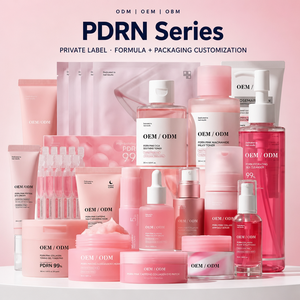
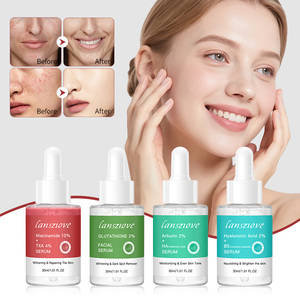
The contemporary beauty consumer expects their morning SPF product to perform multiple dermatological functions. Our contract manufacturing pipeline integrates clinically documented skincare actives directly into stable SPF matrices. As highlighted in our hero formulation portfolio, we specialize in harmonizing sensitive active ingredients—including PDRN (Polydeoxyribonucleotide) for DNA repair, stabilized Vitamin C (Ascorbyl Glucoside) and 5% Niacinamide for pigment correction, Phyto-Exosomes for intercellular extracellular matrix revitalization, and low-molecular-weight Hyaluronic Acid for multi-depth moisture restoration—without destabilizing the sensitive lipid-water equilibrium of the sunscreen emulsion.
Anticipate shifting international retail mandates, evolving consumer demographics, and sustainable packaging demands to future-proof your beauty brand's private label inventory.
Global regulatory bodies and coastal states are systematically banning Oxybenzone and Octinoxate to protect coral reef marine ecosystems. Sourcing mineral-based Non-Nano Zinc Oxide or biodegradable clean chemical filters has transitioned from an ethical choice to a baseline commercial requirement.
Global markets require formulas that leave absolutely zero white cast on diverse skin phototypes (Fitzpatrick I through VI). Procurement managers are prioritizing water-gel essences, fluid milk drops, and invisible dry-touch priming sticks that double as makeup bases.
Driven by ESG investor standards and Gen-Z consumer loyalty, brands are demanding PCR (Post-Consumer Recycled) PE/PET tubes, refillable airless pump bottles, and non-aerosol continuous micro-mist dispensers that do not utilize volatile hydrocarbon propellant gases.
With remote work and increased screen exposure, consumer demand for blue light (HEV) and atmospheric pollution protection has skyrocketed. Sourcing formulas fortified with antioxidant complexes like ectoin, resveratrol, and lutein is standard practice for modern indie skincare brands.
A rigorous, six-step engineering methodology engineered for consistency, speed to market, and absolute regulatory compliance across global jurisdictions.
We analyze your target sales territories (FDA OTC monographed vs. EU Cosmetics Regulation vs. ASEAN). We align intended claims (e.g., SPF 30, SPF 50+, PA++++, water-resistant 80 min) with appropriate filter candidates and permissible maximum concentrations.
Our senior formulation chemists develop custom lab batches within 7–10 working days. We refine fragrance profile, viscosity, skin-feel, and absorption speed based on your feedback until the formula reaches complete benchmark alignment.
Prior to industrial scale-up, prototypes undergo accelerated stability testing (40°C / 75% RH for 3 months), freeze-thaw thermal cycling (-10°C to 45°C), package compatibility checks, and ISO 11930 microbial preservation challenge testing.
We source certified primary packaging components—airless dispensers, high-barrier five-layer EVOH co-extruded tubes, droppers, and dual-chamber bottles. Our regulatory packaging experts verify that ingredient lists, warnings, and barcode placement comply with local labeling laws.
Bulk batches are emulsified in automated multi-stage vacuum homogenizers under strict laminar cleanroom flow. High-speed automatic filling lines fill, seal, laser-code batch numbers, and carton your finished units at rates exceeding 40,000 units per shift.
Goods are secured on heat-treated ISPM-15 compliant wooden pallets with corner protection and moisture-barrier shrink wrap. Our in-house freight forwarders handle bill of lading, Certificate of Origin, MSDS, and export customs declarations for air and ocean transit.
Clear, direct answers regarding minimum order economics, intellectual property protection, regulatory dossier provisioning, and technical packaging compatibility.
Our standard production MOQ starts at 5,000 units for stock formulations utilizing pre-validated in-house packaging components. For bespoke chemical/mineral formulations requiring custom tooling or custom-dyed packaging, the MOQ ranges between 10,000 and 20,000 units depending on raw filter availability and bottle moulding constraints.
We work in close collaboration with accredited independent third-party laboratories. Formulations undergo ISO 24444 (In vivo SPF), ISO 24443 (In vitro UVA / Critical Wavelength), and FDA 2011 Sunscreen Final Rule Broad Spectrum testing protocols. Comprehensive analytical test reports are issued directly for your product dossier.
The regulatory definitions differ: the US FDA classifies sunscreens as Over-The-Counter (OTC) drugs with a strictly limited monograph of allowed UV filters, whereas the European Union governs sunscreens as cosmetics under Regulation (EC) No 1223/2009 Annex VI. Our R&D chemists formulate market-specific variants for your brand to guarantee full regional compliance.
Laboratory R&D sampling and iterative texture benchmarking are offered completely free of charge to qualified commercial brand owners and procurement agents. Any specialized third-party clinical efficacy certifications or proprietary patented actives requested outside our library are quoted transparently prior to development.
Certain organic UV filters and antioxidants are sensitive to atmospheric oxygen and photo-oxidation. We strongly advocate for opaque, multi-layer EVOH co-extruded tubes or airless pump bottles fitted with piston dispensers. Transparent PET bottles are only recommended when formulated with specialized photostabilizers.
Under our contract manufacturing (OEM) agreements, proprietary client-funded formulations remain the exclusive intellectual property of the commissioning brand. For private label (ODM) projects, clients receive unrestricted, exclusive rights to market the finalized formulation under their own registered trademarks.
Connect directly with our senior formulation chemists and global export coordinators. Request custom sample sets, receive competitive tier-bracketed B2B price quotations, and accelerate your time-to-market today.
Send an Inquiry