B2B White Paper & Global Sourcing Guide

Top Trusted Contract Cosmetic Packaging Manufacturers & Exporters

Engineering-grade primary dispensing systems, ISO 22716 GMP contract manufacturing, and compliant global export architecture for premium skincare, haircare, and dermo-cosmetic brands.

40,000/day Automated Filling & Sealing Capacity
1.2M/mo Export-Ready Units Produced
95%+ European-Sourced Raw Materials
ISO 22716 Cosmetics GMP & 9001 Certified Cleanrooms

Advanced Cosmetic Packaging & Formulation Systems

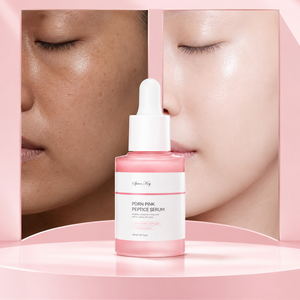
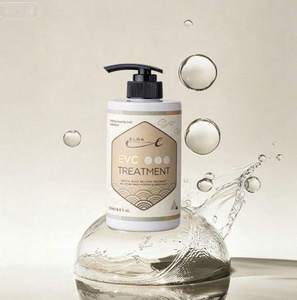
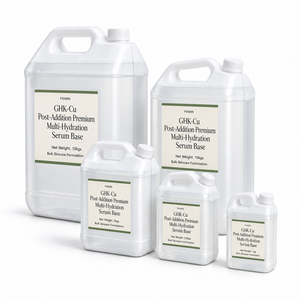
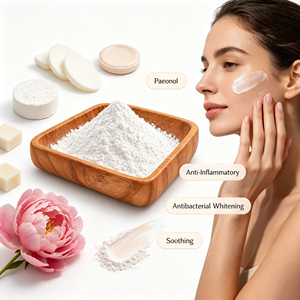
Explore our premier turnkey contract formulations paired with precision primary packaging. Every formulation is engineered for physicochemical compatibility with barrier-protected droppers, high-viscosity airless dispensers, and pharmaceutical-grade vials.

Future Sourcing & Packaging Engineering Trends

Strategic cosmetic procurement is shifting rapidly from conventional container acquisition to life-cycle engineered packaging ecosystems. Multinational buyers must navigate complex legislative frameworks such as the European Union Packaging and Packaging Waste Regulation (PPWR) and the US Modernization of Cosmetics Regulation Act (MoCRA).

Mono-Material Polypropylene (PP) Airless Architecture

Traditional multi-material pumps relying on stainless steel internal springs and polyoxymethylene (POM) valves disrupt circular recycling streams. Next-generation procurement mandates 100% polyolefin mono-material dispensing pumps where elastomeric PP springs replace metal mechanics, enabling 100% curbside recyclability without component disassembly.

  • Zero Metal Contamination
  • Class A Recyclability (RecyClass)
  • PPWR Tier-1 Compliant

Advanced Bio-Active Barrier Protection (OTR/WVTR)

With the surge in biomimetic peptides, Retinoids, Vitamin C, and Salmon-derived PDRN, packaging must act as an active physicochemical barrier. Sourcing trends prioritize Oxygen Transmission Rates (OTR) under 0.1 cc/m²/day and Water Vapor Transmission Rates (WVTR) under 0.5 g/m²/day through multi-layer EVOH co-extrusion and amber borosilicate glass.

  • Zero Dip-Tube Oxidation
  • Nitrogen Purge Flushing
  • Hermetic Piston Seals

PCR Integration & Chemical Purity Assurance

While Post-Consumer Recycled (PCR) content is mandatory under new regional sustainability directives (targeting 30–50% PCR by 2030), brand owners face non-intentional added substances (NIAS) risks. Leading contract packaging exporters implement rigorous migration and leachability testing protocols under ISO 22716 to guarantee safety.

  • Food-Grade rPET / rHDPE
  • NIAS Gas Chromatography
  • Zero Yellowing Stabilization

Technical Engineering White Paper: Polymer-Formula Interaction Protocol

When sourcing turnkey contract manufacturing from international hubs like Istanbul, technical directors must evaluate the structural interaction between active cosmetic compounds and primary packaging substrates. The table below represents our standard 12-week accelerated climatic compatibility baseline (40°C / 75% RH).

Active Formulation Category Target Packaging Substrate Degradation Vector Tested Barrier Requirement Recommended Dispensing Architecture Compliance Status
Bio-Peptides & PDRN Serums High-Density Polyethylene (HDPE) / Opal Glass Oxidative cleavage, active adsorption OTR < 0.05 cc/m²/24h Piston Airless System with Polyolefin Spring EU 1223/2009 Pass
L-Ascorbic Acid & Retinol Emulsions Amber Type III Borosilicate / Multi-Layer EVOH Photo-degradation & air crystallization Spectral cut-off < 450nm Hermetic Dual-Valve Micro Airless Pump US MoCRA Pass
Glycolic & Salicylic Acid Peels Pure Polypropylene (PP) / Heavy-wall PET Environmental Stress Cracking (ESCR) Acid-resistant closure torque Self-venting calibrated dropper with NBR bulb ISO 22716 Verified
Anhydrous Plant Oils & Essential Blends Flint Glass with Fluorinated Liner Plasticizer leaching & swell Zero phthalate / Zero Bisphenol A Micro-orifice dropper insert with tamper ring IFRA Aligned

Cosmetic Packaging Industry Development Trends

The contract manufacturing sector is experiencing rapid technological evolution. Global exporters are bridging the gap between bespoke laboratory formulation and high-speed robotic packaging automation.

Robotic High-Speed Filling Automation

Replacement of semi-manual rotary filling with synchronized linear monobloc lines capable of 40,000 units per shift. Servo-controlled filling nozzles prevent cavitation and air pockets in high-viscosity emulsions like keratin hair masks and urea creams.

  • ±0.2% Filling Precision
  • Automated Torque QC

AI Vision Inspection Systems

Integration of ultra-high-resolution multi-camera vision sensors that detect micro-defects in cap threading, pump seating, silkscreen print offset, and batch lot laser codes in real-time, eliminating secondary packaging failures before international dispatch.

  • 100% In-Line Inspection
  • Zero Optical Alignment Drift

Cleanroom ISO 8 filling Standards

Contract manufacturing of clean, vegan, and preservative-minimized skincare requires Class 100,000 (ISO 8) cleanroom manufacturing zones. HEPA-filtered laminar positive pressure airflows ensure zero airborne particulate contamination during primary container entry.

  • Preservative-Light Formulations
  • Microbiological Integrity

Eurasian Nearshoring Dynamics

Geopolitical trade complexities and elevated ocean freight costs have accelerated the shift away from East Asian sole-sourcing. European and North American brand owners are nearshoring to Türkiye, capitalizing on direct customs union treaties and rapid 4-7 day transit routes.

  • Shortened Lead Times
  • Duty-Free ATR Movement

Rowe Cosmetics: Your Strategic Manufacturing & Export Partner

Headquartered in Esenyurt, Istanbul, Rowe Kozmetik San. ve Tic. Ltd. Şti. is an established contract cosmetics and custom packaging enterprise. Operating strictly on a B2B model, we empower brand owners, clinical lines, and international retail groups with zero direct-to-consumer competition.

Advantage 01

Dual Turnkey (ODM) & Contract (OEM) Models

Whether deploying a market-tested base from our library of 400+ validated formulations or transferring your proprietary intellectual property for scaled filling, our facility accommodates full customization of viscosity, olfactory profiles, packaging componentry, and active concentrations.

Advantage 02

High-Capacity Scalability: 1.2M Units Monthly

Our automated multi-track filling lines handle 40,000 units per shift. Start-ups benefit from viable entry batch sizes, while enterprise accounts are guaranteed seamless continuous bulk production without line-switching bottlenecks as global market demand scales.

Advantage 03

~95% Premium European Chemical Sourcing

Formulation purity is governed by sourcing raw ingredients predominantly from premier tier-one European chemical laboratories. Every compound complies comprehensively with the EU Cosmetics Regulation (EC) No 1223/2009 and is audited for Vegan and Halal compliance.

Advantage 04

In-House Analytical Formulation & Free R&D

Our cosmetic chemists and formulation engineers provide complementary R&D services for contracted clients. From reverse engineering benchmark textures to micro-emulsion stabilization and in vitro SPF confirmation, we eliminate the costly upfront fees charged by independent labs.

Advantage 05

Comprehensive International Certifications

Our manufacturing facility operates under rigid ISO 22716 Cosmetics Good Manufacturing Practices (GMP) and ISO 9001 Quality Management standards. Eligible formulations carry The Vegan Society registrations and official Halal certifications for seamless GCC retail distribution.

Advantage 06

Full Technical Export Dossier Support

We simplify international market entry by generating complete Product Information Files (PIF), Cosmetic Product Safety Reports (CPSR), Certificate of Analysis (COA), safety data sheets (SDS), and stability dossiers to expedite your CPNP (EU), SCPN (UK), or MoCRA (USA) regulatory listings.

Frequently Asked Sourcing & Engineering Questions

Technical, regulatory, and logistics answers curated specifically for corporate procurement directors, brand founders, and quality assurance executives.

► What distinguishes your Private Label (ODM) from Contract Manufacturing (OEM)?

Private Label (ODM) allows you to launch rapidly by adopting our rigorously pre-tested, EU-compliant base formulations—customizing only the fragrance, hero actives, primary packaging, and graphic branding. Contract Manufacturing (OEM) is a custom engineering route where our lab produces your proprietary formula from your exact INCI specifications or custom develops a unique formulation from scratch.

► How do you verify chemical compatibility between bulk formulation and packaging?

Every new formula-container pairing undergoes a mandatory 12-week accelerated stability and compatibility study. Samples are maintained at 4°C, 25°C, 40°C, and 50°C at 75% relative humidity. We monitor weight loss (leaking/permeation), stress cracking, pump stroke dosing consistency, color delta-E changes, and torque maintenance to guarantee zero degradation over shelf-life.

► What are the minimum order quantities (MOQs) for custom packaging and filling?

Our automated lines are architected for commercial flexibility. Standard MOQs depend primarily on component selection: stock glass dropper bottles and standard airless dispensers typically begin at 3,000 to 5,000 units per SKU. Custom-tooled plastic injection or bespoke colored components usually require 10,000 units. Inquire with our export desk for SKU-specific parameters.

► Are your cosmetics formulations compliant with EU Regulation (EC) No 1223/2009 and US MoCRA?

Yes. Over 95% of our raw materials are sourced from EU suppliers, and all formulations strictly adhere to Annex II, III, and V restrictions of (EC) No 1223/2009. For US-destined exports, we ensure full alignment with FDA cosmetic allergen labeling, safety substantiation records, and facility registration under the Modernization of Cosmetics Regulation Act (MoCRA).

► Does Rowe Cosmetics charge for formulation R&D and lab sample creation?

Cosmetic formulation R&D support is provided free of charge for our registered contract and private-label manufacturing partners. If a highly specialized custom ingredient, bespoke fragrance oil, or rare active bio-extract requires dedicated third-party procurement for prototyping, costs are transparently detailed and approved in advance.

► What packaging options exist for sensitive actives like PDRN, Vitamin C, and Peptides?

For oxygen-sensitive and light-degradable actives, we strongly recommend our 100% Polypropylene mono-material airless bottles, dual-chamber airless pumps, or amber borosilicate vials with nitrogen head-space purging during filling. These systems prevent exposure to atmospheric oxygen and eliminate ultraviolet radiation degradation.

► How are export logistics, palletizing, and international freight managed?

All finished goods are packed in heavy-duty export grade cartons, stretch-wrapped on heat-treated ISPM-15 compliant pallets, and prepared under Incoterms (EXW, FOB, CIF, or DAP). Our export desk coordinates directly with your freight forwarder or assists in arranging overland road freight across Europe, air cargo, or ocean container shipments.

► What is the standard production lead time from approved sample to dispatch?

For ODM private label production using standard components, lead times generally range between 4 to 6 weeks following artwork and sample approval. Bespoke OEM formulations requiring new tooling, specialty component importation, or custom silkscreen lithography typically run 8 to 12 weeks. Every client receives a detailed milestone schedule upon order confirmation.

Initiate Your Contract Packaging Project Today

Consult with our cosmetic chemical engineers and packaging specialists. Receive tailored container compatibility evaluations, benchmark sample kits, and comprehensive wholesale quotation matrices within 24 business hours.