Procurement Clarity
Frequently Asked Questions by Japanese Importers & Brand Directors
Addressing regulatory clearances, minimum order sizes, technical inspections, and intellectual property protection.
Q1
How do your formulations comply with Japan's PMD Act (Yakki-hō) and MHLW regulations?
Our formulations are engineered in compliance with the Standards for Cosmetics issued by the Ministry of Health, Labour and Welfare (MHLW). We cross-reference every ingredient against the Japanese Cosmetic Ingredient Codex, ensuring that no prohibited substances are utilized, restricted ingredients remain strictly within legal quotas (e.g., specific preservatives and UV absorbers), and all raw materials are 100% free of prohibited animal-derived contamination. We provide full quantitative ingredient disclosures directly to your appointed Licensed Marketing Authorization Holder (Seizo Hanbai Gyosha) for customs notification.
Q2
Can you manufacture under the Quasi-Drug (Iyaku-bukai-hin) classification for whitening or anti-acne claims?
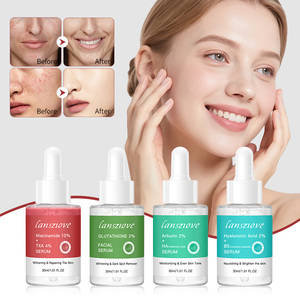
While Quasi-Drugs require a specialized pre-approval process and manufacturing license verification handled in Japan, we routinely produce formulations containing recognized active principles (such as Dipotassium Glycyrrhizate, Niacinamide, and Ascorbic Acid derivatives) within established pharmacological dosages. We furnish the complete chemistry, manufacturing, and stability documentation required by your Japanese regulatory sponsor to submit for PMDA verification.
Q3
What are your Minimum Order Quantities (MOQ) for custom OEM and standard ODM lines?
Our operational infrastructure is designed to accommodate dynamic scale. For standard white-label ODM formulas utilizing stocked packaging options, MOQs can start from 1,000 to 3,000 units per SKU. For fully custom chemical developments requiring proprietary tooling, custom outer carton packaging, or bespoke European active integrations, our baseline MOQ typically starts at 5,000 units.
Q4
How do you guarantee batch stability during sea transit across changing thermal zones?
Transit from Turkey through maritime routes to East Asia exposes containers to variable humidity and thermal fluctuations. All our formulations undergo 3-month accelerated stability testing at 45°C and 75% relative humidity, freeze-thaw challenge cycles (-5°C to +40°C), and centrifugation stress tests to ensure no phase separation, color shifting, or viscosity collapse occurs during oceanic container shipping.
Q5
Who owns the formula intellectual property (IP) developed during the R&D stage?
In our Contract Manufacturing (OEM) and Custom Formulation engagements, proprietary formulation rights can be exclusively contracted to your brand upon production milestone fulfillment. Rowe Kozmetik maintains a strict B2B-only non-compete business model: we do not own, operate, or sell proprietary retail brands, ensuring zero conflict of interest with our manufacturing partners.
Q6
What primary and secondary packaging solutions do you source to meet Japanese consumer expectations?
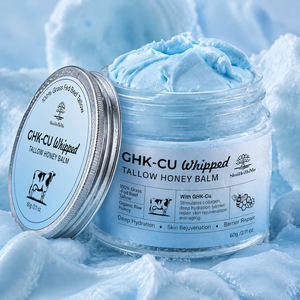
Japanese consumers maintain an exceptionally high standard for packaging tactile feel and defect-free finishes. We source and fill precision-engineered airless dispensers, glass dropper vials with silica-free pipettes, luxury acrylic jars, and aluminum barrier tubes. Furthermore, we support secondary shrink-sleeving, tamper-evident safety seals, and precise Japanese-language label application in our cleanroom packaging bays.