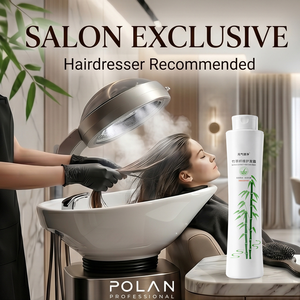
Tested for viscosity stability, scalp tolerance, and regulatory compliance. Directly scalable from trial pilot batches to commercial high-speed production.
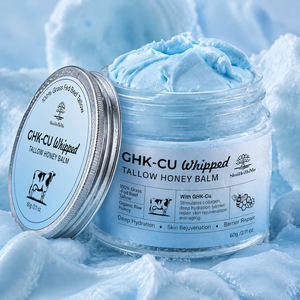
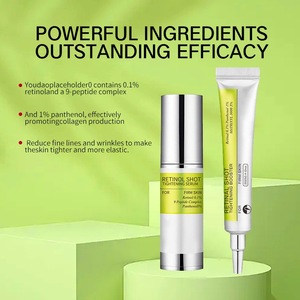
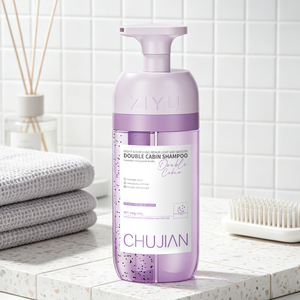
Osaka represents the commercial heart of Western Japan, housing one of Asia's most sophisticated and discerning personal care demographics. In recent years, the hair care landscape across Osaka—spanning the high-end salon corridors of Shinsaibashi and Umeda, the specialty lifestyle concept shops in Minami, and widespread drug and cosmetics chains (Matsumoto Kiyoshi, Sundrug, and Daikoku Drug)—has undergone a fundamental transformation. Japanese consumers no longer evaluate hair shampoo merely as a secondary hygiene wash; it is now perceived as an essential trichological treatment, an extension of anti-aging facial skincare, commonly referred to across the Kansai market as "Scalp Esthetic" (頭皮エステ).
To successfully capture shelf space and drive salon repeat appointments in Osaka, private label brand managers, retail buyers, and e-commerce incubators require manufacturing partners capable of balancing stringent micro-bubble foaming aesthetics with gentle surfactant chemistry. Formulating for Osaka requires uncompromised alignment with the Ministry of Health, Labour and Welfare (MHLW) regulatory standards, absolute avoidance of harsh sulfates (SLS/SLES), incorporation of multi-weight biomimetic peptides, and an innate understanding of Japanese water chemistry. As an established ISO 22716 GMP and ISO 9001 certified contract manufacturer, Rowe Cosmetics provides turnkey OEM and ODM custom formulation engineering that bridges European ingredient purity with Japanese consumer performance expectations.
Tailoring formulations to specific commercial verticals ensures accelerated retail velocity and brand retention across Kansai's unique market channels.
High-end hair studios in Osaka demand dual-action shampoos that preserve chemical straightening treatments, reduce cuticle erosion during bleaching, and deliver rich, micro-elastic foam for Japanese "head spa" massages. Formulations focus on hydrolyzed silk, peptide keratin complexes, and phytosterols.
With luxury ryokans in neighboring Arima Onsen and Kyoto drawing substantial visitor volumes through Osaka transit hubs, eco-conscious amenity lines require biodegradable surfactants, soothing hinoki and yuzu botanical aromas, and gentle skin-barrier compatible cleansing agents.
Fast-growing direct-to-consumer digital native brands targeting urban Japanese professionals dealing with metabolic scalp fatigue, sebum imbalances from transit congestion, and seasonal humidity fluctuations. High-potency biotin, copper tripeptide (GHK-Cu), and caffeine complexes lead this category.
The contemporary Japanese consumer demonstrates unmatched ingredient literacy. In Osaka's urban centers, buyers actively scan ingredient decks (全成分表示) for surfactant profiles and functional humectants before committing to an order. Sourcing teams must prioritize several non-negotiable trends currently reshaping the domestic market:
Traditional cleansing agents such as sodium lauryl sulfate and ammonium laureth sulfate have seen steep declines across Japanese drugstore chains. The current baseline requirement in Osaka is an amino acid-derived surfactant architecture, featuring ingredients like Sodium Cocoyl Glutamate, Sodium Lauroyl Methylaminopropionate, and Tea-Cocoyl Glutamate. These gentle cleansers match the natural weakly acidic pH (5.0–5.8) of the human scalp, preventing lipid matrix stripping while generating dense, cushion-like lather that prevents mechanical hair breakage during friction washing.
The boundary between facial skincare and hair care has dissolved. Leading Osaka brands formulate shampoos with clinical dermatological ingredients: Niacinamide for follicular microcirculation, Triple-Weight Hyaluronic Acid for epidermal hydration, Ceramide NP/AP/EOP for cuticle inter-cellular cement repair, and Fermented Rice Extracts (Sake Lees) for microbiome balance. The shampoo is treated not simply as a wash-off item, but as a delivery mechanism for scalp dermal conditioning.
Japan leads the global cosmetic sector in refill pouch usage; over 80% of domestic hair shampoo purchases in Osaka grocery and drug outlets consist of lightweight refill pouches (詰め替えパウチ). Rowe Cosmetics supports this logistical and ecological reality by offering turnkey automated filling for flexible spouted pouches, post-consumer resin (PCR) bottles, and aluminum dispensaries designed to minimize freight footprint through Port of Osaka customs checkpoints.
| Performance Parameter | Mass Market Standard | Prestige Salon Specification (Osaka Target) | Rowe Cosmetics Technical Delivery |
|---|---|---|---|
| Primary Surfactant Basis | Sulfates (SLES / SLS / ALS) | Amino Acid & Betaine Complexes | Sodium Lauroyl Sarcosinate + Cocamidopropyl Betaine + European Plant Glucosides |
| Target Scalp pH Level | pH 6.5 – 7.5 (Alkaline shift) | pH 5.2 – 5.8 (Biomimetic acidic) | Buffered precisely at pH 5.5 ± 0.2 with citric/lactic acid balancing |
| Foam Rheology & Density | Large, airy, rapid collapse | Fine micro-bubble ("Soufflé" texture) | High elastic foam stability index (>92% retention at 5 minutes) |
| Active Cuticle Deposition | Heavy insoluble silicones (Dimethicone) | Bio-peptides, Keratin, Bamboo Extract | Weightless bio-affinity conditioning; hydrolyzed keratin & phyto-lipids |
| Trace Preservative Profiling | Parabens, MIT, Formaldehyde donors | Phenoxyethanol-free or ultra-low blends | EU Regulation (EC) 1223/2009 & MHLW compliant green preservative matrix |
Full-spectrum in-house contract manufacturing combining European regulatory compliance with industrial-scale execution.
Our facility operates under rigorous ISO 22716 Good Manufacturing Practices and ISO 9001 quality oversight. Each production lot undergoes total viable microbial count tests, heavy metal assays (lead, arsenic, mercury, cadmium), and real-time viscosity stability centrifuging.
We do not charge customer-facing R&D fees for sample refinement. Our cosmetic formulation chemists adjust viscosity, conditioning profile, natural botanical infusions, and fragrance stability until your team signs off on the exact prototype matching your brand vision.
Formulated in strict adherence with European Cosmetics Regulation (EC) No 1223/2009. We prioritize ethical botanicals, The Vegan Society compliance, and non-GMO functional actives that streamline the regulatory documentation required by Japanese import clearance authorities.
Export shipments undergo automated bubble seal checks, moisture barrier lining, corner-board edge reinforcement, and anti-tipping stretch wrapping configured for sea freight container shipping into the Port of Osaka or express air-cargo via Kansai International Airport (KIX).
We supply bilingual technical dossiers including Certificate of Analysis (COA), Safety Data Sheets (SDS), exact percentage ingredient breakdowns, and stability study summaries to empower your Japanese Responsible Person (製造販売元) during MHLW product notifications.
Whether executing an initial boutique run of 3,000 units or a nationwide multi-SKU retail program of 100,000 bottles, our automated volumetric filling lines maintain exact volume tolerances, torque-controlled capping, and precision label placement under single-point traceability.
Addressing regulatory, logistics, and formulation criteria for Japanese importers, distributors, and salon network operators.
Partner directly with an ISO 22716 GMP contract manufacturer. Speak with our international export formulation engineers to receive customized bulk samples, complete INCI lists, and factory-direct pricing for your brand.