The Cosmetic Chemistry of Chemical Peels Understanding Free Acid Value: The Core Chemistry B2B Sourcing Managers Must Know
In B2B skincare procurement, the nominal percentage printed on an acid serum bottle (e.g., "10% Glycolic Acid") does not determine clinical performance or skin irritation. Efficacy is strictly governed by the Free Acid Value (FAV), which is determined by the Henderson-Hasselbalch equilibrium between the acid's dissociation constant (pKa) and the finished formula’s pH.
Glycolic acid, for example, has a pKa of 3.83. If a manufacturer formulates a 10% glycolic acid solution at a pH of 3.83, exactly 50% (5.0%) of the acid is in its bioavailable, un-ionized free acid form capable of penetrating the hydrophobic stratum corneum. If the lab lazily buffers the product to pH 4.8, the bioavailable free acid drops drastically to under 10% of the total acid content, rendering the marketing claim useless. Conversely, unbuffered low pH (<3.0) causes severe chemical burns and consumer liability.
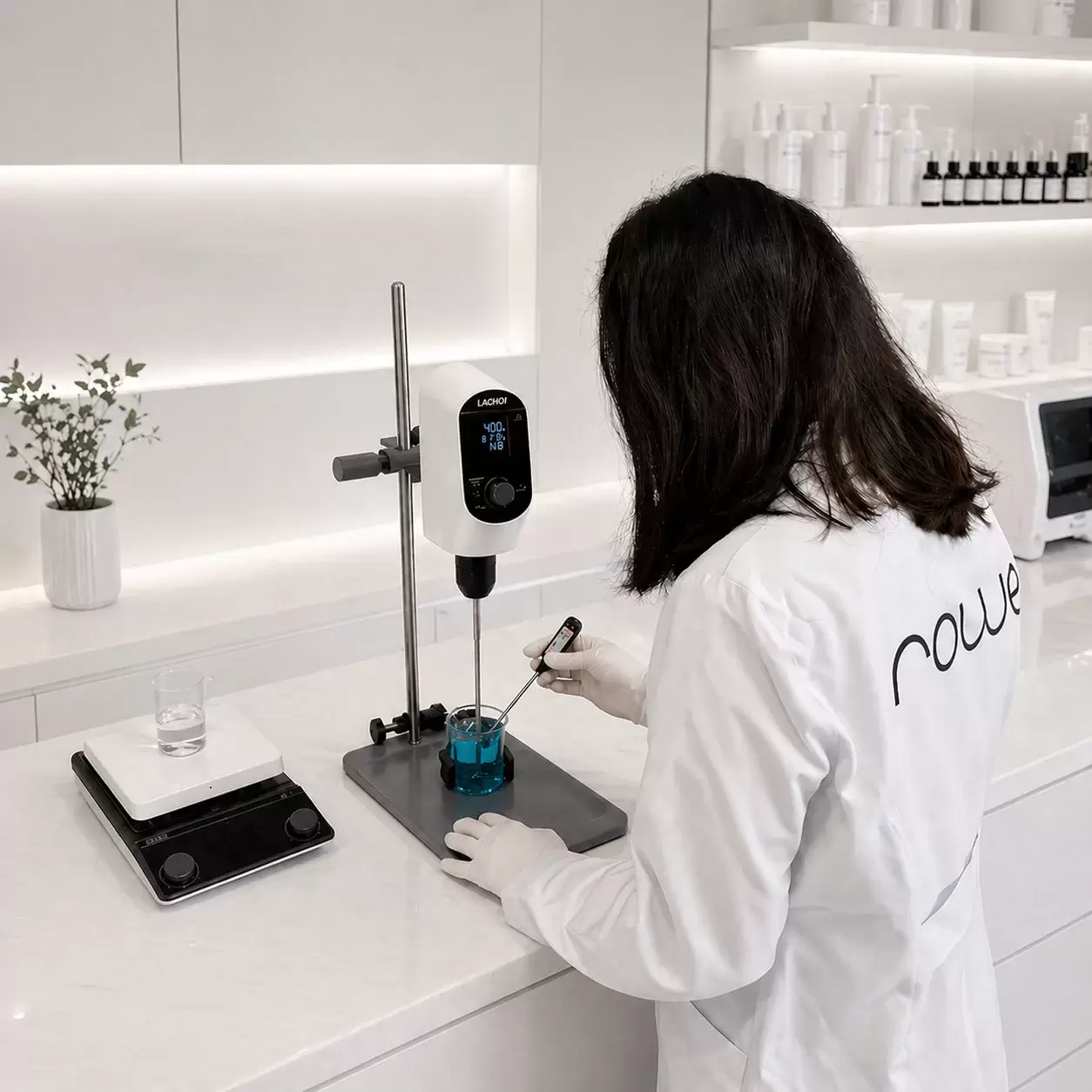
Rowe Cosmetics' in-house formulation chemists stabilize every batch using precise dual-buffering matrices (Sodium Hydroxide / Citric Acid / Sodium Citrate). This ensures clinical exfoliation and desquamation while preventing consumer adverse reactions, ensuring full alignment with the European Scientific Committee on Consumer Safety (SCCS) and US Cosmetic Ingredient Review (CIR) guidelines.