Technical Insight & Information Gain
The Engineering Behind Ethical Chemistry: De-risking Vegan Cosmetics Manufacturing
For decades, legacy cosmetic formulation depended on animal-derived emollients, thickeners, and functional polymers. Ingredients such as lanolin from sheep wool, squalene from shark liver, carmine pigment from crushed cochineal beetles, and bovine-derived collagen formed the backbone of anti-aging creams and vibrant cosmetics. Transitioning to precision vegan cosmetics manufacturing requires an advanced understanding of biomimicry and organic reaction kinetics.
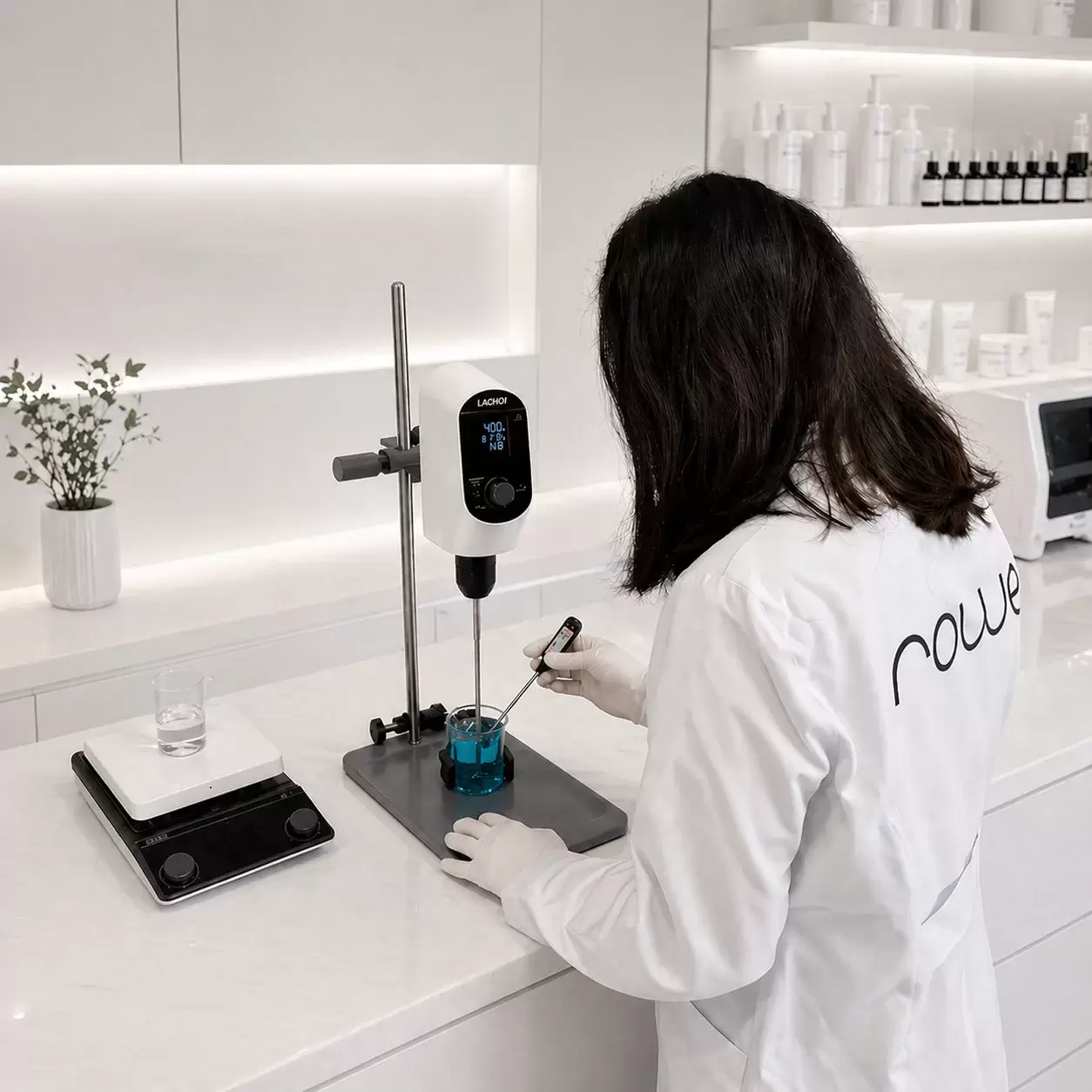
At Rowe Cosmetics, our dedicated in-house R&D chemists replace obsolete animal derivatives with high-purity, bio-fermented, and plant-derived counterparts without compromising rheology, texture, or clinical efficacy:
1. Biomimetic Hyaluronic Acid & Vegan Collagen: Rather than relying on rooster combs or bovine cartilage, we utilize non-GMO bacterial fermentation (Streptococcus zooepidemicus on plant substrates) to generate multi-molecular weight hyaluronic acid that hydrates across stratified epidermal layers. For collagen regeneration, our lab employs bio-fermented yeast proteins that mimic human type-I collagen peptide chains.
2. Olive-Derived Squalane & Phytosterols: Shark squalene is replaced with 100% plant-extracted squalane derived from European cold-pressed olive or sugarcane, delivering identical skin-penetration profiles with zero animal compromise.
3. Plant-Derived Keratin & Botanical Waxes: Instead of animal hooves and sheep feathers, our hair care formulas harness micro-hydrolyzed wheat, corn, and soy amino acids. For balms and emulsion stabilizers, synthetic esters and wild-harvested candelilla, rice bran, and carnauba waxes replace traditional beeswax.